easy to know
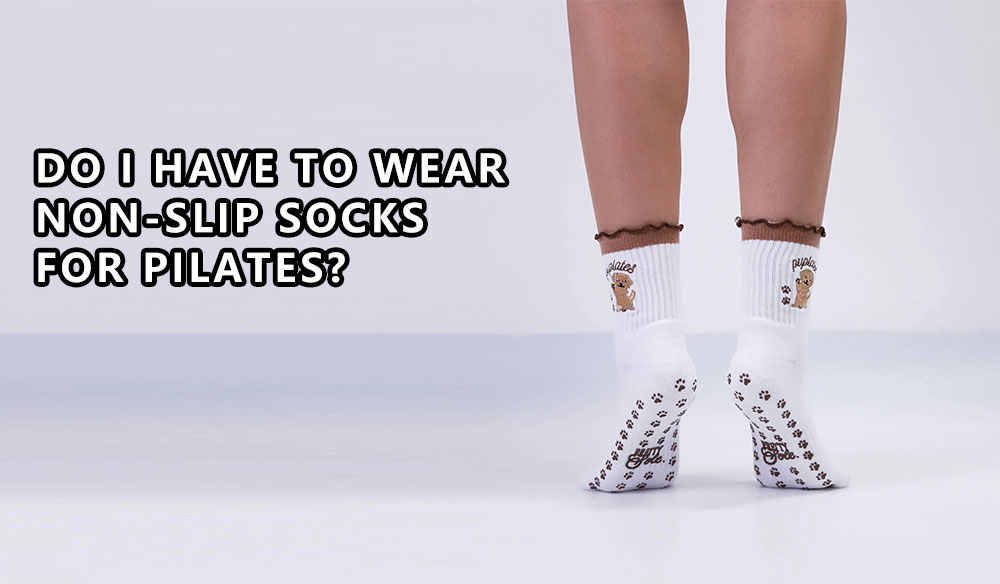
Do I have to wear non-slip socks for Pilates?
Pilates does not require non-slip socks, but strongly recommends wearing them—especially for beginners, those who sweat easily, or when training on core beds/equipment.
Content Quick View
1. Why is it strongly recommended to wear non-slip socks during Pilates?
The core training logic of Pilates is “precise control, core stability, and body alignment,” with the feet serving as the key support point for many movements (such as standing, side-lying, and quadruped positions).
1.Safety: Preventing slip-and-fall injuries
- Pilates is often performed on non-slip mats or equipment such as reformers or Cadillacs, where the feet frequently bear the responsibility of supporting the body and transmitting force (as seen in exercises like the Hundred, Side Plank, and Single-Leg Stretch). If wearing regular cotton socks or practicing barefoot:
- Regular cotton socks tend to slip on mats, especially when feet become sweaty, causing a sudden drop in support and stability. This can lead to ankle sprains, knee strain, or loss of balance resulting in falls.
- Practicing barefoot in public facilities poses hygiene risks (such as fungal or bacterial infections), and sharp edges on equipment may cut the feet.
2.Training Effect: Enhance movement precision
Pilates demands exceptional precision in muscle control, and non-slip socks provide stable traction, allowing practitioners to focus more intently on the movements themselves.
- For instance, during the “bridge” exercise, anti-slip socks stabilize the foot position, preventing insufficient glute activation or lower back compensation caused by slippage.
- During “standing leg curls,” these socks enhance friction between the feet and the floor, aiding core stability and ensuring precise contraction of the leg muscles.
3.Comfort: Foot protection + Moisture-wicking and breathable
Professional Pilates non-slip socks are typically made from a blend of cotton, nylon, and spandex. This composition provides sufficient elasticity to conform to the foot without slipping, while also quickly absorbing foot perspiration to prevent discomfort caused by dampness. Additionally, the toe area features seamless construction to minimize friction on the toes, making them particularly suitable for extended practice sessions.
2. Key Selection Criteria for Pilates Anti-Slip Socks
| Focus Area | Specific Requirements |
|---|---|
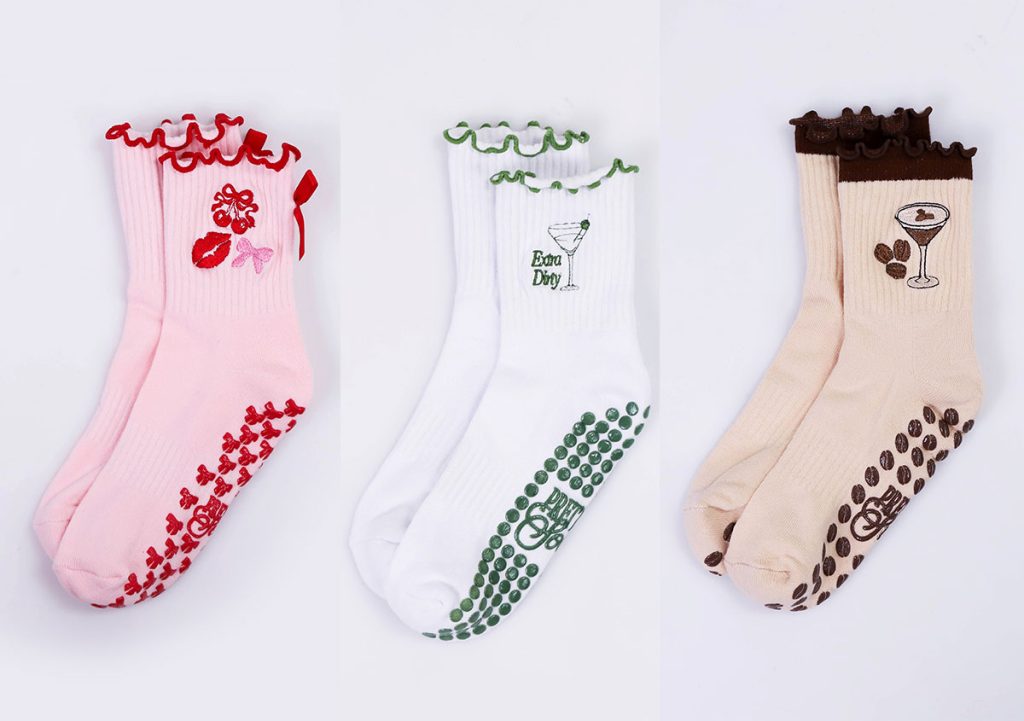
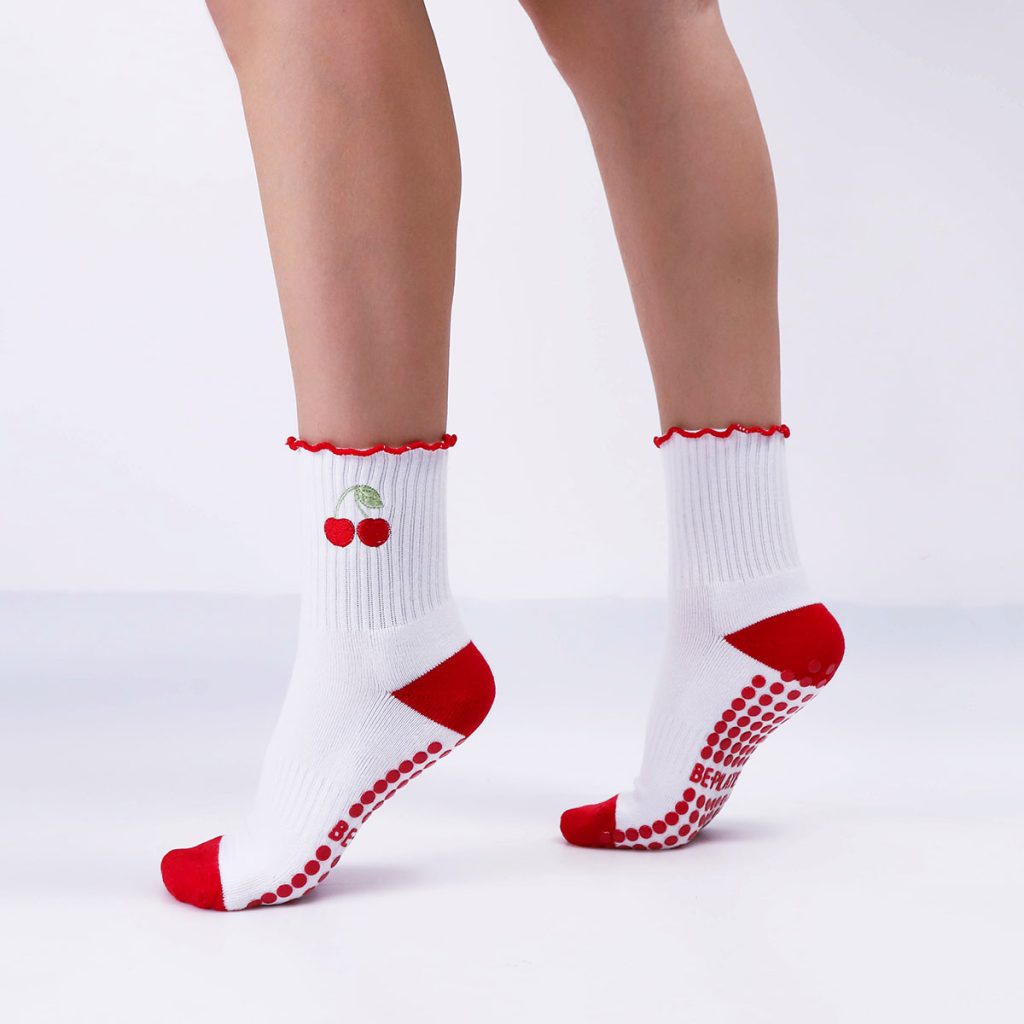
| Anti-Slip Grips | – Material: Prioritize silicone grips (more durable, stronger grip, and less prone to peeling than rubber); – Placement: Covering ball of foot and heel (key support zones); premium options extend to base of toes to prevent toe slippage; – Pattern: Dots, stripes, or grid patterns are all acceptable—focus on full, well-defined, and densely arranged grips. |
| Sock Material | Recommended blend: 50%-70% Cotton + 20%-30% Nylon + 5%-10% Spandex: – Cotton absorbs moisture, nylon enhances durability, spandex ensures elastic fit (no sagging or tight constriction); – Avoid 100% cotton socks (wrinkle when sweaty, reducing grip) or pure synthetic socks (poor breathability, cause sweaty feet). |
| Fit & Comfort | Cuff should not be too tight (to avoid restricting circulation); sock body must snugly fit foot and ankle without excess wrinkles (wrinkles can cause slipping or skin friction); – Select size according to shoe size—avoid “one-size-fits-all” (often ill-fitting). |
| Design Details | – Toe Seam: Seamless or flatlock stitching (reduces pressure on toes); – Heel Design: 3D contoured knitting (fits natural heel shape, resists shifting); – Thickness: Thin socks suit summer or heavy sweaters; medium-thick socks ideal for winter or cold floors. |
3.When is it acceptable not to wear anti-slip socks?
- Personal preference + venue conditions permitting: If using a professional Pilates mat with high slip resistance at home and preferring barefoot practice (ensure mat surface is clean), socks may be temporarily omitted; however, promptly wipe feet dry after sweating to prevent slipping.
- Specific apparatus exercises: For certain movements using the Stability Chair or Spine Corrector where feet must be secured directly to the apparatus pedals (which feature built-in anti-slip grooves), and socks may interfere with the secure fit, you may remove them as advised by your instructor.
DIY SOCK offers comprehensive customization services, covering material selection, production processes, design solutions, and overall coordination. We have a professional team that can provide you with customized solutions. We support orders starting from one pair of samples. If you need Custom pilates grip Socks, please contact us for a quote and free design services.
Summary
The “stability” and “precision” inherent to Pilates make anti-slip socks an exceptionally cost-effective accessory—not an essential item, but a preferred choice for enhancing safety and exercise quality. Especially for beginners, those practicing in public facilities, or individuals prone to slipping or excessive sweating, prioritizing professional Pilates anti-slip socks is recommended to avoid compromised training experiences or even injuries caused by inadequate equipment.