easy to know
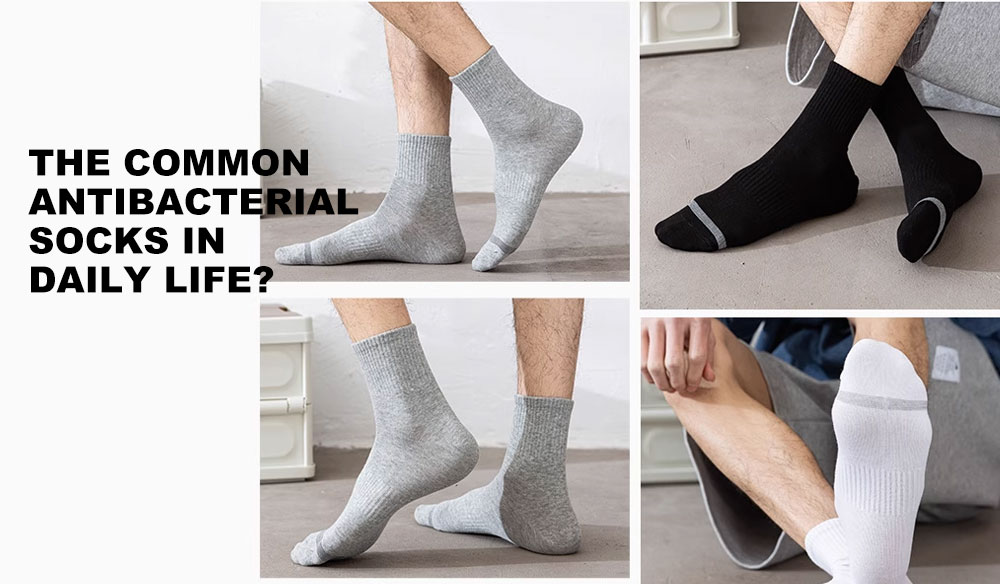
The Common Antibacterial Socks in Daily Life?
The most common antibacterial socks we encounter in daily life are those infused with copper ions, silver ions, and bamboo fiber. The antibacterial efficacy of these three types of socks also varies significantly.
Content Quick View
Silver Ion Antibacterial Socks
PROS:
- Superior Antibacterial Performance: Inhibits common pathogens such as Staphylococcus aureus and Escherichia coli by over 99%, eliminating 99% of bacteria within 5 minutes.
- Long-lasting durability: Retains 82%-90% antibacterial activity after 50 washes, with nano-silver particles permanently embedded within the fibers.
- Rapid Odor Elimination: 72-hour long-lasting odor protection, cutting off the odor production chain at its source.
- Breathable and quick-drying: Primarily utilizes mesh construction for rapid moisture absorption and sweat wicking, ideal for athletic activities.
CONS:
- Health Concerns: Heavy metals may be absorbed through the skin, posing a risk of allergic reactions (skin redness, swelling, itching) with prolonged use. Those with sensitive skin should use with caution.
- Environmental Impact: Nano-silver may accumulate through the food chain, affecting the ecological environment.
- Priced higher
- Some products vary in quality: Low-priced items contain minimal antibacterial agents and lose effectiveness after just a few washes.
Bamboo Charcoal Antibacterial Socks
PROS:
- Natural Antibacterial: Contains the natural antibacterial compound “Bamboo Kun,” achieving over 90% inhibition rate against Staphylococcus aureus.
- Moisture-wicking and breathable: Hollow fiber structure with 72% porosity absorbs moisture over 50% faster than pure cotton and dries 40% quicker.
- Physical Deodorization: Adsorbs odors through microporous structure for long-lasting effectiveness.
- Eco-Friendly & Healthy: Made from natural materials, gentle on skin, suitable for sensitive skin.
CONS:
- Relatively weak antibacterial effect: Primarily relies on adsorption rather than killing, with a bacteriostatic rate of approximately 90%-94.5%, lower than silver ions.
- Poor abrasion resistance: Prone to deformation and pilling, with a relatively short lifespan, making it unsuitable for vigorous physical activities.
- Poor colorfastness: Prone to fading after washing
- Some products are misleadingly labeled: containing only a small amount of bamboo charcoal particles, their effectiveness is limited.
Copper Fiber Antibacterial Socks
PROS:
- Safe and Non-Irritating: Copper is an essential trace element for the human body and is classified by the FDA as a GRAS (Generally Recognized as Safe) substance. It can be excreted through normal metabolic processes.
- Broad-spectrum antimicrobial: Kills 99.9% of bacteria, viruses, and fungi within 2 hours, with particularly effective results against fungi.
- Long-lasting antimicrobial protection: Copper ions are permanently bonded to the fibers, maintaining antimicrobial efficacy even after 50+ washes.
- Anti-static: Excellent conductivity reduces static electricity generation.
- Anti-inflammatory properties: Helps alleviate inflammation associated with conditions like arthritis and reduces swelling in the feet.
- Moderately priced: lower cost than silver ion antimicrobial materials
CONS:
- High-maintenance care: Hand wash recommended. Avoid machine washing and alkaline detergents, as they may cause deformation and color fading.
- Poor stability: Prone to environmental influences; must be stored in a cool, well-ventilated area away from mothballs.
- Color control is challenging: improper control during production may easily lead to color variation issues.
- Product quality varies significantly with issues present: Odor-blocking effectiveness is mediocre, and the material is not wear-resistant.
Purchasing Recommendations
- Sweaty Feet / Sports Enthusiasts: Opt for silver-ion antibacterial socks for superior antimicrobial and quick-drying performance.
- Sensitive Skin: Bamboo charcoal antibacterial socks are gentler, reducing the risk of allergies.
- Athlete’s foot / fungal infections: Copper fiber antimicrobial socks demonstrate outstanding efficacy against fungi and offer high safety.
- Long-term users: Copper fiber or high-quality silver ions (retain over 80% effectiveness after 50 washes) offer greater cost-effectiveness.
Note:
- The quality of antibacterial socks on the market varies greatly. When purchasing, it is recommended to check the antibacterial test reports (such as SGS certification), confirm the antibacterial rating (typically 3A-10A), and pay attention to the material composition ratio.
Summary
For the strongest antibacterial properties and wash durability, choose silver ions. For daily moisture absorption, dryness, and softness, opt for bamboo charcoal. For a balanced blend of long-lasting antibacterial effects, safety, and value, consider copper fibers.