easy to know
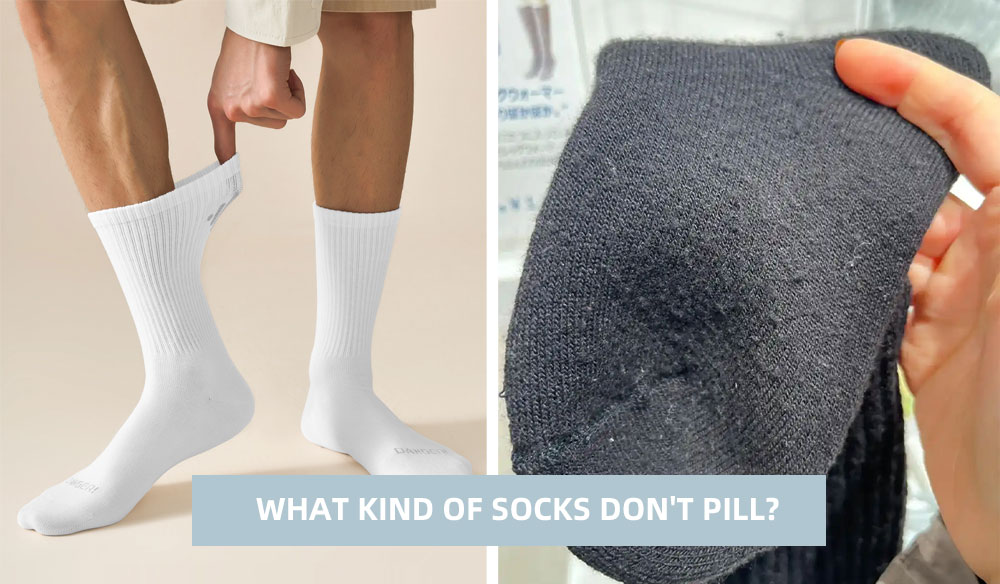
What kind of socks don't pill?
There is no such thing as a sock that never pills. “Pill-resistance” is not an exclusive characteristic of any single material, but rather depends on multiple factors including fiber length, yarn twist, weaving technique, finishing processes, and wearing/washing habits. However, choosing the right material, manufacturing process, and style can significantly reduce the likelihood of pilling.
Content Quick View
Theoretically, the 3 types of materials “least prone to pilling”
1.Long-staple cotton (Xinjiang cotton, Egyptian cotton, etc.)
- Long fibers with high strength and minimal fuzz; even if slight surface fuzz is present, it easily sheds during washing, giving the appearance of being “pill-resistant.”
- Note: Must be high-count, long-staple cotton with high yarn twist; ordinary short-staple cotton will still pill.
2.Ultra-fine filament synthetic fiber
- Nylon filament yarn, polyester filament yarn, coated spandex yarn, etc.: These fibers are continuous with no “short ends,” and resist fraying and tangling after friction.
- Sports socks often use this type of filament yarn for the outer layer, paired with cotton or bamboo fiber for the inner layer, balancing durability with moisture absorption.
3.Silk/Silk-finished cotton
- Silk is a natural filament with a smooth surface that resists pilling. Mercerized cotton undergoes an alkali solution treatment combined with stretching, which “burns” away the fibers’ fuzz and enhances its luster, significantly improving its pilling resistance.
- Disadvantages: High price, average warmth, commonly seen in business or formal socks.
Two Special Processes That Make It Easier to “Appear Pilling-Free”
1.High-twist + high-density terry/regular socks
- The yarn’s high twist and dense needle count lock the fibers more securely; despite containing the same cotton content, it resists pilling better than low-twist, loose structures.
2.Anti-pilling treatment (anti-pilling resin, singeing, bio-enzyme treatment)
- If a brand labels its product as “anti-pilling” or “pilling resistance ≥ Level 4,” it indicates specialized treatment has been applied, significantly extending the lifespan without pilling.
Common Misconceptions
1.“100% cotton is guaranteed not to pill.”
- Only long-staple, high-count, and high-twist pure cotton truly achieves this; cheap short-staple cotton pills just as easily, if not more severely.
2.“Products containing polyester/acrylic will definitely pill.”
- Short-staple polyester and acrylic fibers are prone to pilling; however, ultra-fine filament polyester or nylon fibers are actually “abrasion-resistant and resistant to fraying,” making them the mainstay in anti-pilling performance.
Considerations When Selecting
- Sports/Outdoor: Choose blended athletic socks made from “nylon filament + spandex-covered” or “polyester filament + cotton” blends. Brands often label these with DRI-FIT, Coolmax, etc.
- Daily/Business: Choose flat-knit socks with a high needle count (≥144N) made from “60%+ long-staple cotton + approximately 30% nylon filament + spandex.” Those labeled as mercerized cotton or combed cotton are preferable.
- Winter Warmth: Opt for terry socks made from a “wool + nylon filament” blend, specifically labeled as “anti-pilling” or “pilling-resistant treated,” to prevent natural pilling in wool.
- Avoid designs prone to pilling: Opt for fewer towel-backed or thick-pile styles, as their fibers tend to tangle and form pills. Ensure high-density materials in high-friction areas like the sole and sock cuff.
Summary
To find socks that resist pilling, prioritize “long-staple fibers + high twist and high density + anti-pilling treatment” over focusing solely on material composition. By selecting socks using this approach, achieving socks that remain pill-free after 30 to 50 wears is entirely achievable.