easy to know
How to Quickly and Properly Clean Soccer Grip Socks
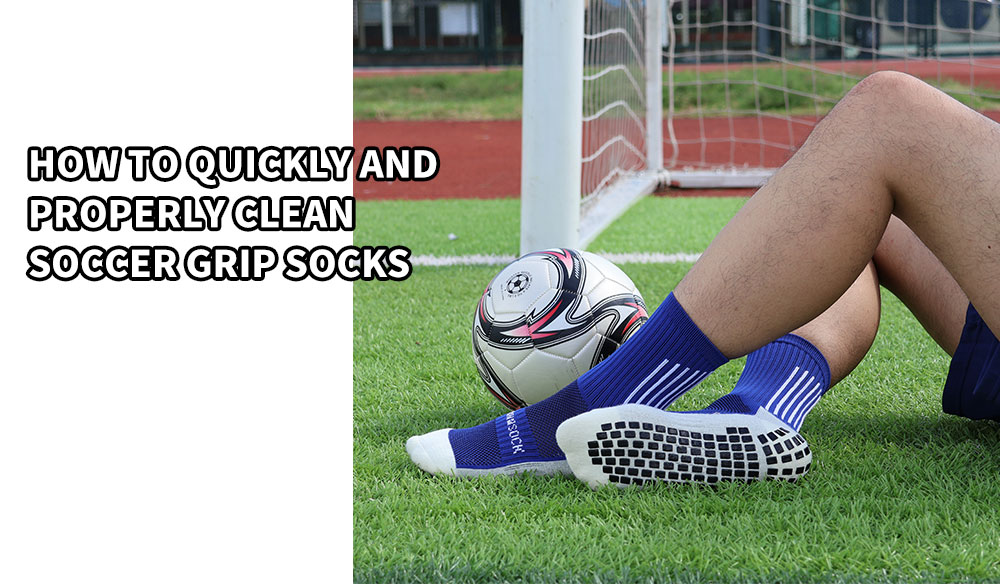
Cleaning and maintaining soccer Grip socks requires balancing “efficiency” with “sock protection,” with the core focus being to avoid damaging the anti-slip structure and elastic fibers.
Content Quick View
3-Minute Quick Wash Cycle
- Pre-rinse: Immediately after playing soccer, rinse off grass clippings and dirt with cold water until no water drips when wrung out.
- Soak for 1 min: Fill basin with cold water + 5 ml neutral detergent. Turn socks inside out, press twice to saturate the towel base with foam. Do not exceed 1 min (longer soaking accelerates rubber aging).
- Key 30 Seconds: Place soles together and rub both pairs with hands for 30 seconds. Then rub the cuffs and toes for 10 seconds each.
- Rinse: Rinse under running cold water for 20 seconds until no slippery feeling remains when squeezed.
- Spin Dry: Fold the sock cuffs inward, then gently twist them together 3 times (avoid forceful twisting). Immediately lay flat on a dry towel, roll it up, and press for 5 seconds to absorb surface moisture.
- Air Dry: Clip the sock cuffs onto a hanger and hang upside down in a cool, well-ventilated area. They will be dry by morning (avoid direct sunlight and tumble drying).
Emergency Laundry Plan (For Match Days When You're in a Rush)
- Use cold water only on gentle cycle; turn items inside out and place in laundry bag.
- Do not use fabric softener or bleach.
- Spin at 400 rpm or less; remove immediately after washing and air dry in the shade.
4 Habits to Keep Your Socks from Losing Their Elasticity for Half a Year
- Rotate three pairs of socks: Allow spandex a 48-hour recovery window to double the lifespan of each pair.
- Change on the sidelines: Switch to non-slip socks at the court to reduce friction on concrete surfaces.
- Place insoles with the fuzzy side up: The towel-like base interlocks with the fuzzy surface to minimize shear force on rubber particles.
- Store only when completely dry: Even slight dampness can cause rubber particles to mold and powder.
5 signals must be replaced.
- Silicone dot/strip wear: The silicone dots on the bottom of the socks become smooth, peel off, or disappear over large areas. When you start feeling slippage inside your shoes and they no longer provide stable traction, it’s time for a replacement. This is the most critical safety indicator.
- Loose cuff: The cuff fails to snugly wrap around the calf, becoming loose and floppy. It provides insufficient compression support and tends to slip down during physical activity.
- Wear and tear causing holes or material hardening: Holes may appear or the fabric may lose its softness, leading to chafing during wear and compromising the experience.
- The socks have become stiff and yellowed overall, and even after washing, they cannot regain their softness (the fibers have aged and deteriorated).
- Persistent odors that won’t go away: Even after thorough cleaning, lingering odors indicate bacteria may have deeply embedded themselves into the fibers
Summary
The above method effectively cleans socks while extending their lifespan. A pair of high-quality anti-slip soccer socks, when used for 1-2 games per week and properly maintained, can last 3-6 months. Training socks, due to higher usage frequency, typically last 2-3 months.
DIY SOCK offers comprehensive customization services, covering material selection, production processes, design solutions, and overall coordination. We have a professional team that can provide you with customized solutions. We support orders starting from one pair of samples. If you need Custom soccer grip Socks, please contact us for a quote and free design services.