easy to know
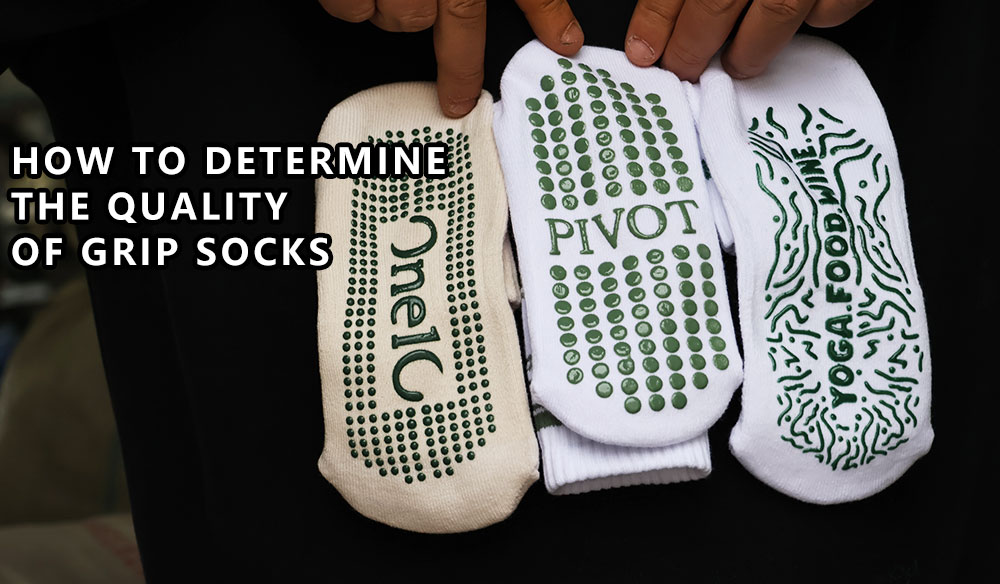
How to Determine the Quality of Grip Socks
To determine the quality of Grip socks and whether they meet anti-slip standards, a comprehensive evaluation must be conducted across four core dimensions: anti-slip performance, base material quality, compliance, and suitability for specific usage scenarios. This assessment should incorporate specific testing standards and practical evaluation methods.
Content Quick View
1. Material of anti-slip rubber dots / structure
Premium Materials: Made from food-grade silicone, TPR (thermoplastic rubber), or natural rubber, featuring excellent elasticity, wear resistance, and resistance to aging and peeling, with no pungent odor.
Testing Method:
- Gently scratch the adhesive spot with your fingernail. High-quality adhesive spots resist damage and do not shed particles.
- Smell the adhesive spot. If it emits a strong chemical odor, it may contain harmful substances (such as formaldehyde or plasticizers) and exhibit poor durability.
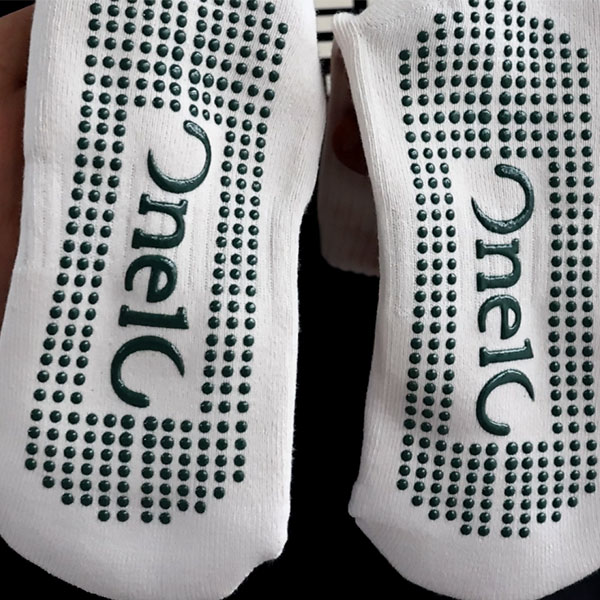
2. Design of Anti-Slip Rubber Pads / Structure
Shape and Density:
- Preferably round rubber dots (3-5mm diameter) or diamond/ribbon patterns, which distribute force more evenly and provide more stable slip resistance than smaller dots (<2mm);
- Rubber dot density should be moderate (2-4 dots per square centimeter). Excessive density causes sole stiffness, while sparse density results in insufficient slip-resistant surface area.
Distribution Range:
- Must cover three key stress areas: the forefoot, arch, and heel (especially the heel and forefoot, which account for over 80% of friction during walking);
- Substandard anti-slip socks often feature only localized adhesive dots on the heel or scattered dot distribution, significantly compromising slip resistance.
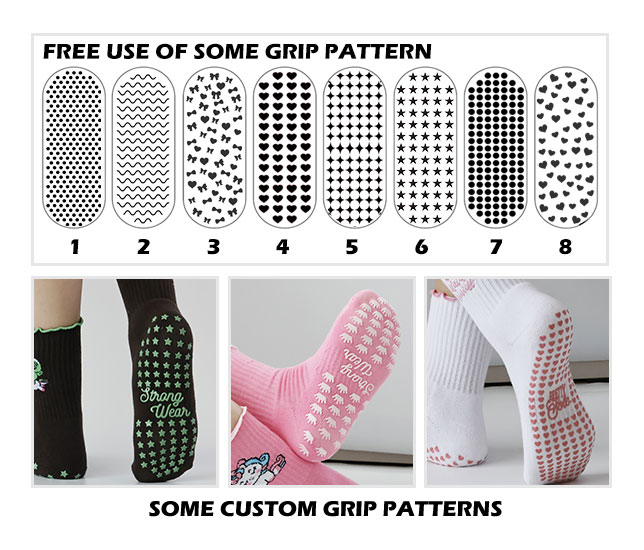
3. Anti-slip Stability (Dynamic Friction Test)
In professional testing, slip resistance is measured by the coefficient of friction (COF). Typically, a COF of ≥0.5 is required on dry surfaces, while a COF of ≥0.3 is required on wet surfaces (e.g., tile + water). Higher values indicate better slip resistance.
Practical Test:
- After putting on the socks, lightly step and walk on slippery surfaces such as wet tiles or wooden floors to assess traction. The product passes if there is no slipping or shifting.
- Stretch the sole with both hands to observe whether the adhesive dots stretch in sync with the fabric (high-quality dots adhere tightly to the fabric without peeling or shifting).
4. Compliance and Standards Certification
Chinese Standards & Certification
- T/CNSS 009-2021: Scope of Application for Anti-Slip Socks, Group Standard for Anti-Slip Socks, Specifying Dynamic Friction Coefficient Requirements
International Standards and Certifications:
- EU: EN 13036-3:2011 (Personal protective equipment – Slip-resistant footwear – Part 3: Socks – Slip resistance requirements), which imposes stringent friction coefficient requirements for wet surfaces;
- USA: ASTM F1677-19 (Standard Test Method for Slip Resistance of Footwear and Socks Using a Horizontal Traction Tester).
Compliance Assessment Methodology:
- Check the sock body / packaging label: Verify if it indicates compliance standards, safety category (Class A / Class B), manufacturer, and ingredient list. Products without labels or with unclear information are “unlabeled products”—never purchase them.
- Requesting Test Reports: Reputable brands can provide third-party test reports (e.g., from SGS, ITS) verifying slip resistance and safety standards. Focus on whether the “dynamic friction coefficient” and “formaldehyde content” meet regulatory requirements.
5. Usage Scenario Adaptability (Anti-slip ≠ universal; must match requirements)
- Home Scenario: Prioritize “Silent + Non-Slip” with thin cotton + silicone dots. Avoid thick soles (causes stuffiness when walking) and hard rubber dots (creates noise on floors).
- Sports Scenario (e.g., yoga, Pilates): Requires “anti-slip + breathability + snug fit.” Opt for full rubber sole patterns (like grid designs) and high-stretch fabrics to prevent slipping or shifting during movements.
- Elderly/Infant Scenarios: Prioritize “Class A Safety Standards.” Anti-slip rubber dots should be soft (to prevent foot irritation), cuffs should be loose (to avoid ankle constriction), and fabrics should be sweat-wicking and odor-resistant.
- Medical Scenarios (e.g., Post-Surgery, Rehabilitation): Must meet “Medical-Grade Anti-Slip” standards. Some products may be labeled “Thrombosis Prevention Aid,” featuring rubber dot designs specifically adapted for medical footwear.
Summary
By evaluating these dimensions, you can effectively distinguish between “high-quality anti-slip socks” and “substandard anti-slip socks.” Remember: slip resistance is key, but safety, comfort, and suitability for specific scenarios are equally important. Never opt for “unregulated products” just to save money, as this could lead to falls due to inadequate slip resistance.
DIY SOCK offers comprehensive customization services, covering material selection, production processes, design solutions, and overall coordination. We have a professional team that can provide you with customized solutions. We support orders starting from one pair of samples. If you need Custom grip Socks, please contact us for a quote and free design services.