easy to know
What are Bamboo Fiber Socks?
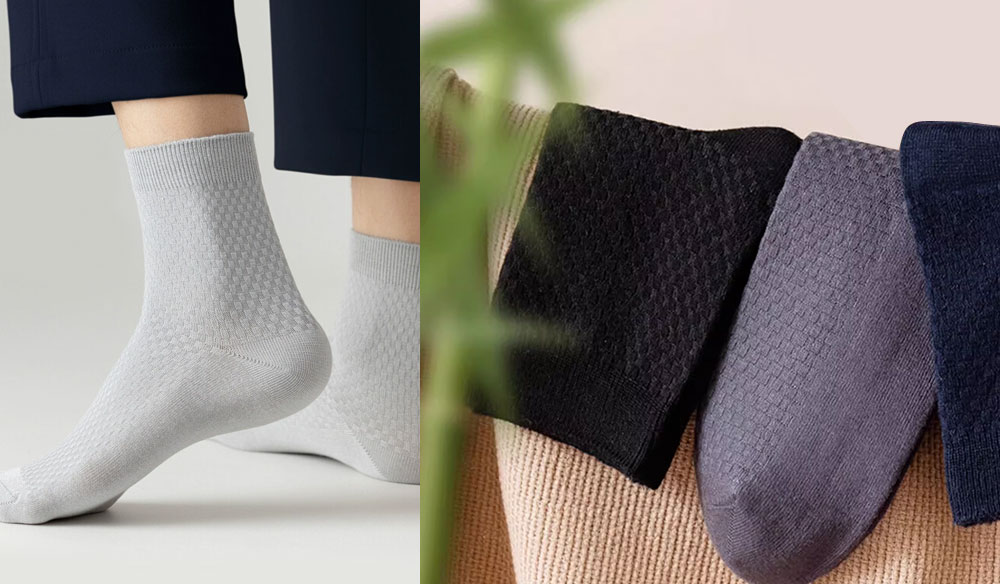
Bamboo fiber socks are made from natural bamboo as the raw material, using physical and chemical methods to extract cellulose fibers (i.e., bamboo fiber) which are then woven into socks.
Content Quick View
Bamboo Fiber Socks
First, let’s clarify one point: what we commonly refer to as “bamboo fiber” socks actually refers to bamboo pulp fiber or bamboo viscose fiber.
The process of making it is not simply cutting bamboo into strips and then weaving them into cloth, but rather:
- Dissolve natural bamboo through physical and chemical methods.
- Produce a honey-like viscous bamboo pulp
- Through specialized spinning equipment, the viscous solution is extruded through spinneret orifices, solidifies, and regenerates to form fibers.
- Finally, these fibers are spun into yarn and woven into socks.
Therefore, it is a regenerated cellulose fiber, similar in nature to Modal and Lyocell, except that its raw material comes from bamboo.
Bamboo Fiber Socks vs Regular Cotton Socks
| Comparison Dimension | Bamboo Fiber Socks | Regular Cotton Socks |
|---|---|---|
| 1. Raw Material & Environmental Impact | Raw Material: Bamboo. Environmental Benefits: Bamboo grows rapidly, requires minimal water, and generally needs no pesticides—making it a highly sustainable resource. Processing Concerns: Traditional viscose methods use chemical solvents that may cause pollution. However, more eco-friendly closed-loop processes (e.g., Lyocell technology) are now available. | Raw Material: Cotton. Environmental Issues: Conventional cotton farming consumes large amounts of water and pesticides, significantly impacting the environment. Organic cotton offers a more sustainable alternative. |
| 2. Comfort & Feel | Exceptionally soft and silky-smooth, with a texture similar to silk or Tencel. The fabric has a subtle sheen and excellent skin-friendliness, ideal for sensitive skin. | Soft and comfortable, representing the classic choice for comfort. However, new cotton socks often require a few washes to reach peak softness. |
| 3. Breathability | Excellent. Bamboo fibers have a cross-section filled with micro-gaps and pores, enabling instant moisture absorption and superior breathability—often called “breathable fiber.” | Good. Cotton fibers possess a natural hollow structure that provides decent breathability, though typically not as effective as bamboo. |
| 4. Moisture-Wicking Performance | Outstanding. Bamboo fiber absorbs moisture 3–4 times better than cotton. It quickly draws sweat away from the skin and evaporates it, keeping feet dry and fresh. | Good. Cotton absorbs moisture well but releases it slowly. When damp, it can feel heavy and stay wet longer, reducing comfort. |
| 5. Temperature Regulation | Superior. Thanks to its exceptional breathability and moisture management, bamboo socks offer a cool-in-summer, warm-in-winter experience—keeping feet comfortable year-round. | Moderate. Wet cotton socks draw heat away from the body, potentially making feet feel cold and clammy. |
| 6. Antibacterial & Odor Resistance | Naturally antibacterial. Bamboo contains a natural antimicrobial agent called “bamboo kun,” which effectively inhibits bacteria and mold growth, significantly reducing odor. | No natural antibacterial properties. Cotton can become a breeding ground for bacteria when damp, leading to unpleasant odors if not washed promptly. |
| 7. Durability & Care | Slightly less durable. Bamboo fiber loses strength when wet and is less abrasion-resistant than cotton. Repeated washing may cause pilling or deformation. Recommendation: Hand wash in cold water or use a gentle machine cycle; avoid direct sunlight and tumble drying. | Highly durable. Cotton fibers are strong—especially when wet—and highly resistant to wear, making them easy to care for and long-lasting. |
| 8. Price | Generally slightly more expensive than regular cotton socks. | Affordable and economical, representing the most common and budget-friendly option on the market. |
Recommendations for Selection
Bamboo fiber socks are like the “high-performance athletic” or “luxury comfort” category in the sock world. They boast ultimate softness, super dryness, and antibacterial odor control, making them especially suitable for:
- People prone to sweaty feet (sweaty feet).
- Those who pursue the ultimate in comfort.
- People who need to stand or walk for extended periods.
- People troubled by foot odor.
- Summer or situations where keeping feet dry is necessary.
Regular cotton socks are the “classic all-rounder” of the sock world. They’re comfortable, durable, affordable, and hypoallergenic, making them the safest and most common choice for everyday wear. Suitable for:
- Daily commuting, leisure activities.
- Individuals with skin sensitivity to certain fibers (cotton is widely recognized as a hypoallergenic material)
- Economy-conscious consumers seeking value for money
selection tips
- Many Bamboo Fiber Socks on the market today are blended fabrics, such as cotton + bamboo fiber + spandex/polyester. These socks combine the durability of cotton, the comfort of bamboo fiber, and the elasticity of synthetic fibers, often making them the best overall choice. When purchasing, be sure to check the ingredient label.
- Washing Instructions: Bamboo fiber socks require gentle washing (cold/warm water, avoid strong alkaline detergents). Do not expose to direct sunlight (UV rays can damage fiber structure, causing hardening and loosening). Air dry in the shade. Cotton socks can be machine washed and sun-dried as usual, offering greater durability.
Summary
Bamboo fiber socks boast the key selling points of “quick-drying + antibacterial properties,” making them ideal for those seeking relief from sweaty feet and foot odor. Standard cotton socks excel in “softness + durability,” so if price and longevity are your priorities, they’re the way to go.