easy to know
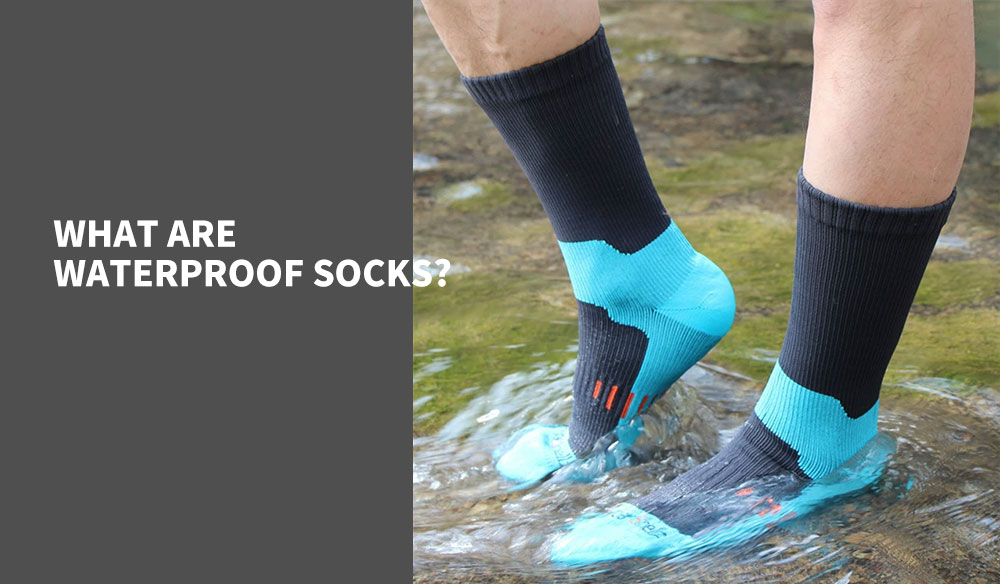
What are waterproof socks?
Waterproof socks are designed to provide additional protection under specific conditions, while regular socks prioritize comfort and versatility for everyday wear.
Content Quick View
What are waterproof socks?
Waterproof socks, as the name suggests, are socks designed to repel water. Their primary purpose isn’t to let you stomp through puddles, but to keep your feet dry and warm in wet outdoor conditions—such as hiking in the rain, walking through snow, or crossing streams.
Its waterproofing principle does not rely on a surface coating like raincoats, but instead employs more sophisticated technology.
- Waterproof Breathable Membrane: This is the most critical component. Waterproof socks typically incorporate a membrane similar to the ePTFE (expanded polytetrafluoroethylene) used in high-end jackets, such as GORE-TEX® or comparable technologies, within their inner layer. This membrane features billions of microscopic pores sized precisely between water molecules and water vapor molecules.
- Liquid water (rain, snow, external puddles) forms large molecular clusters that cannot pass through these micropores, thus being blocked outside.
- Water vapor molecules (from foot perspiration) are small enough to pass through micro-pores, enabling breathability.
- Seamless Construction and Sealing Process: To ensure complete waterproofing, critical seams on the socks—such as toe seams—are constructed using seamless techniques or sealed with specialized adhesive tape. This prevents water from seeping through stitch holes.
- Functional fabric combination: An abrasion-resistant protective layer on the outer membrane, paired with a comfortable, skin-friendly quick-dry layer on the inner side, together form a complete waterproof system.
The Difference from Ordinary Socks
- Material Composition:
- Waterproof socks feature a multi-layer structure consisting of “fabric + waterproof membrane + lining,”
- Regular socks are typically single-layer garments made from a single material such as cotton, wool, or synthetic fibers.
- Core Functionality:
- Waterproof socks prioritize waterproofing and moisture resistance while maintaining breathability.
- regular socks focus primarily on warmth, sweat absorption, and comfort, without waterproof capabilities.
- Suitable Scenarios:
- Waterproof socks are designed for outdoor activities involving water crossings and damp environments (such as river tracing, hiking in rainy weather, and snow activities).
- Regular socks are intended for everyday commuting, indoor wear, and other routine scenarios.
- Thickness and Weight: Due to their multi-layered construction, waterproof socks are typically thicker and slightly heavier than regular socks.
- Price: Waterproof socks feature higher-cost functional materials and manufacturing processes, making them significantly more expensive than regular socks.
Purchasing Recommendations
Simply put, regular socks are your “first layer of comfort,” while waterproof socks are your “ultimate protective layer.”
When do you need waterproof socks?
- When your activities inevitably involve stepping in water or snow, or prolonged exposure to damp environments, such as:
- Spring and autumn hiking trails with muddy, waterlogged sections
- Winter snow trekking and skiing (with appropriate snow boots)
- High-altitude environments require adaptation to snowmelt and sudden rainfall.
- Stream trekking is possible, but please note that if the water rises above your sock cuffs, it will pour in from above, rendering them ineffective.
- Damp underground mines, we recommend wearing waterproof socks to reduce trench foot and other foot ailments.
- Important Notes:
- Not diving socks: Waterproof socks have limited waterproofing height (typically at the ankle or calf), so it’s pointless if water pours in through the sock opening.
- Breathability has its limits: During extremely high-intensity activities, feet sweat profusely. Even the most waterproof socks may struggle to wick moisture fast enough, leaving the interior feeling damp. However, for moderate to low-intensity activities, they perform exceptionally well.
- Pairing with the right shoes: When wearing waterproof socks, it’s best to also pair them with shoes that offer some waterproofing. Make sure the shoes are half a size to one size larger than your usual size, as waterproof socks are typically thicker.
Summary
In general, waterproof socks are specially designed to prevent water penetration. They are typically made using specialized materials and manufacturing techniques to keep feet dry and comfortable.