easy to know
Do Grip socks Really Help When Playing Soccer?
Wearing Grip socks does offer some benefit when playing soccer, but whether they provide “significant help” varies from person to person. It depends on your playing intensity, foot shape, how well your cleats fit, and your sensitivity to stability and comfort.
Content Quick View
1.The Difference Between Soccer grip Socks and Regular Athletic Socks
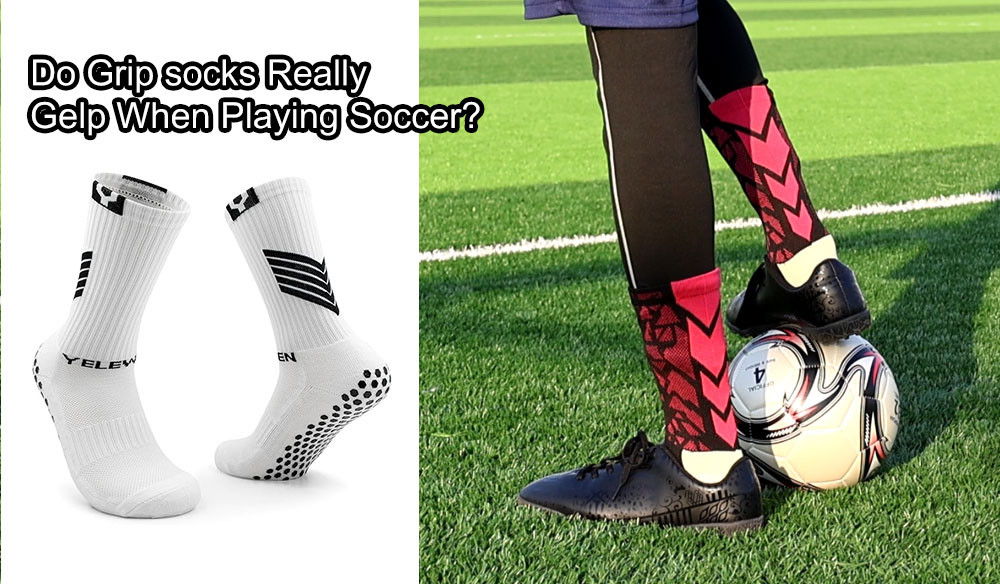
The “anti-slip” design of soccer grip socks is not intended for the playing surface (traction relies on the shoe’s outsole), but rather addresses the fit between the foot and the shoe’s insole, solving the problem of ordinary socks slipping inside the shoe.
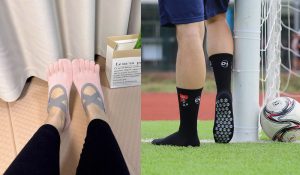
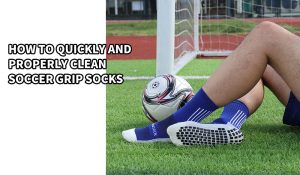
- Anti-slip sole layer: Most feature silicone particles, rubber grooves, or specialized knit patterns in key power zones (forefoot, heel) to enhance friction between the foot and shoe insole;
- Sock Cuff : Utilizes high-elasticity fabrics or zoned knitting to minimize sock slippage on the calf and ankle, further stabilizing foot positioning;
- Enhanced Moisture-Wicking: Some anti-slip socks improve fabric breathability to prevent “sock slippage” caused by foot perspiration (a problem more pronounced in regular socks when wet).
2. The Impact of Wearing grip Socks on Playing Soccer
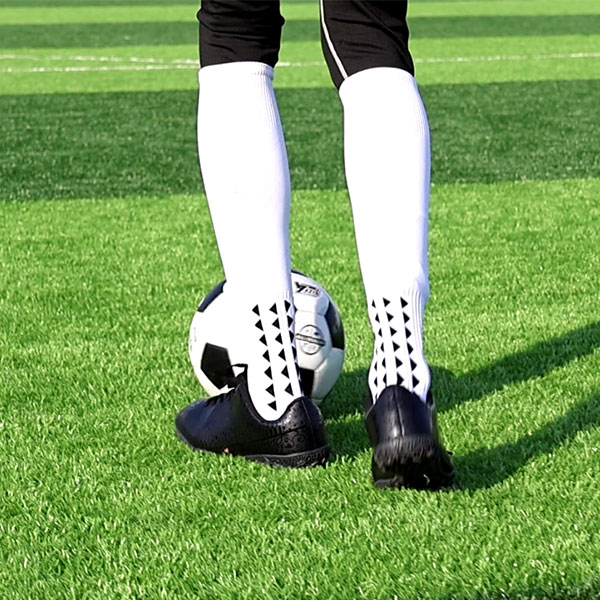
In soccer, even the slightest foot movement within cleats directly impacts efficiency and safety—such as sliding forward during sudden stops or shifting sideways when changing direction. This not only compromises technique but also risks ankle sprains and toe injuries. Anti-slip socks are specifically designed to address these issues.
1. Improve foot-shoe fit to reduce motion energy loss
The sudden stops, changes of direction, passing, and shooting in soccer all require “the foot and shoe to exert force in unison.”
- Regular socks: Feet tend to slip slightly inside shoes (especially with excessive foot sweat or smooth sneaker insoles), causing power to be partially lost during impact—meaning force isn’t fully transferred to the shoe. For instance, when shooting, foot slippage disperses power, slowing ball speed and altering direction.
- Grip socks: The anti-slip layer on the sole securely grips the inner sole of your sneakers, enhancing foot-to-shoe synchronization for more direct power transfer. This means more stable ball control during short passes, more efficient force transmission during long passes, and no delayed movements caused by slipping during quick changes of direction.
For amateur players, this “reduction in loss” effect is even more pronounced: since their swing mechanics are inherently less precise, anti-slip socks minimize “movement distortion caused by slipping,” indirectly improving technical performance.
2. Enhance foot stability and reduce the risk of injury
Approximately 30% of foot injuries in soccer (such as ankle sprains and toe contusions) are related to “foot slippage within the shoe.”
- During sudden stops: If the foot slides forward, toes may strike the shoe’s toe box directly, potentially causing toenail bruising or toe contusions.
- During directional changes: If the foot slides sideways, the ankle is forced to endure additional twisting forces, increasing the risk of sprains.
- Upon landing from jumps: If the foot shifts within the shoe, unstable balance can easily lead to ankle inversion or eversion.
Grip socks reduce these “unintended slips” by stabilizing foot positioning, keeping ankles and toes in a relatively stable load-bearing state. This fundamentally lowers the likelihood of such “equipment-related injuries.”
3. Enhance comfort during extended physical activity and reduce blisters.
- When regular socks slide inside shoes, friction between the sock surface and skin increases, particularly on the soles and ankles. Prolonged physical activity (such as a 90-minute game) can easily cause blisters or fluid-filled blisters to form.
- The snug fit of anti-slip socks reduces relative friction between the sock and skin. Some products feature thickened or smoothened areas in high-friction zones—such as the heel and toe creases—further lowering the risk of blisters. For players who train frequently or play full matches, the enhanced comfort is immediately noticeable.
4. Grip socks adapt to “special scenarios,” addressing equipment shortcomings.
In the following scenarios, the effectiveness of anti-slip socks is amplified, even becoming an essential necessity:
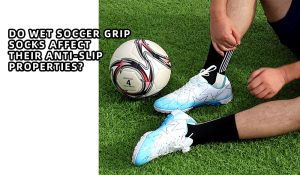
- Slippery surfaces / Playing in the rain: Feet sweat more than usual, and regular socks become slippery when wet. Anti-slip socks with dual moisture-wicking and grip features help alleviate this issue.
- Smooth shoe insoles: Some entry-level soccer shoes have plain fabric insoles with insufficient friction. Anti-slip socks directly address this weakness.
- Special foot shapes (e.g., narrow feet, high arches): With regular socks, these foot types create more space between the foot and shoe, increasing the likelihood of slipping. Anti-slip socks’ snug fit reduces this gap.
3. Grip socks also have their limitations and are not a universal solution.
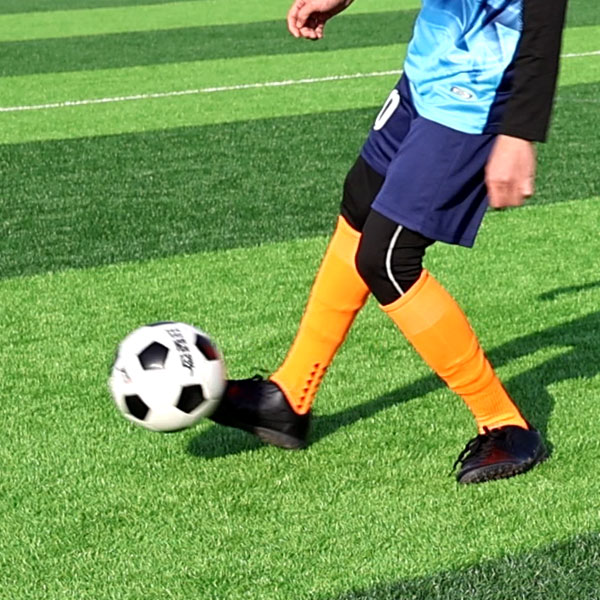
- Anti-slip socks do not enhance “surface traction”: They address friction between the foot and shoe, while surface traction (e.g., sudden stops on grass or artificial turf) relies entirely on the shoe’s outsole. If the outsole is severely worn or the surface is excessively wet, anti-slip socks cannot prevent the shoe from slipping on the surface.
- Effectiveness depends on product quality: Low-cost anti-slip socks often have silicone particles that shed easily and lack sufficient elasticity. Their grip diminishes significantly after a few uses. Opt for reputable brands .
- Not an “essential piece of equipment”: For players with well-fitting footwear, sufficient friction from the shoe’s inner sole, and low-intensity activities (e.g., one hour of recreational play), standard soccer socks suffice. Anti-slip socks are better suited for “high-frequency training, official matches, and individuals prone to slipping.”
Summary: How much do anti-slip socks help when playing soccer?
- For amateur players / frequent users: Highly beneficial. Significantly improves movement stability and reduces injury risk (especially for those prone to slipping or twisting ankles), making it a “cost-effective performance upgrade.”
- For professional players / specific scenarios: An “enhancement rather than a necessity.” Professional players typically wear custom-made cleats with ample insole traction. However, anti-slip socks can further enhance performance during rainy conditions or high-intensity matches.
- For occasional recreational players: Limited benefit. If sessions are brief, surfaces are dry, and cleats provide adequate grip, standard soccer socks suffice—no need to purchase anti-slip socks specifically.
DIY SOCK offers comprehensive customization services, covering material selection, production processes, design solutions, and overall coordination. We have a professional team that can provide you with customized solutions. We support orders starting from one pair of samples. If you need Custom soccer grip Socks, please contact us for a quote and free design services.