easy to know
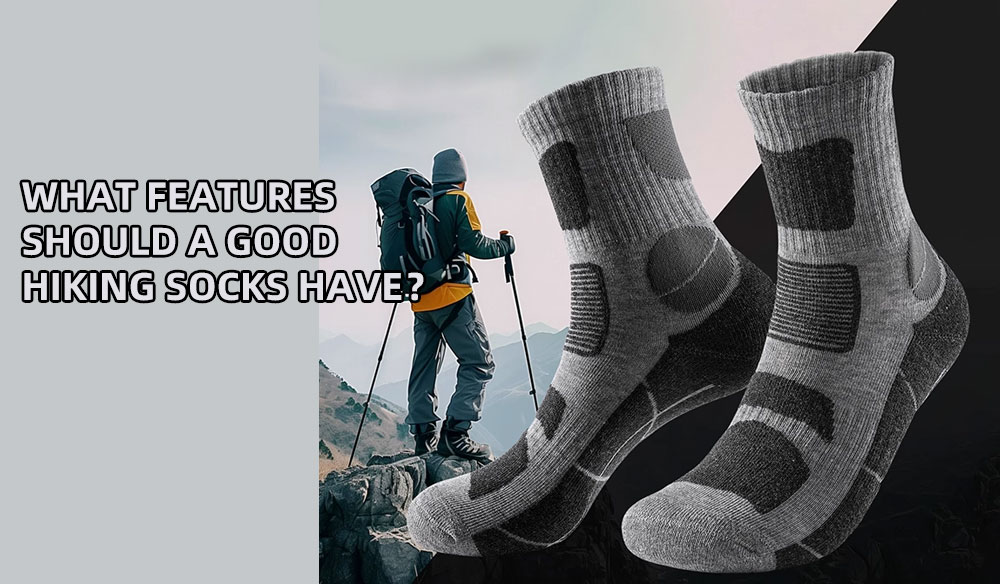
What Features Should a Good Hiking Socks Have?
A pair of high quality hiking socks is essential gear for ensuring a positive hiking experience and maintaining foot health. Their core functions are to protect the feet, regulate the microenvironment, and enhance comfort—not merely to provide warmth or aesthetic appeal.
Content Quick View
1. The 6 Essential Features of Quality Hiking Socks
In mountaineering, feet face multiple challenges including friction, moisture, impact, and temperature fluctuations. High-quality mountaineering socks must specifically address these issues.
1. Moisture-wicking and sweat-wicking to keep feet dry
- Core Need: During hiking, feet sweat profusely. If moisture accumulates, it can lead to damp socks, cold feet, and even blisters or fungal infections.
- Key Logic: Quality hiking socks must simultaneously “absorb moisture” and “wick sweat” — first absorbing perspiration from the feet, then using fiber structure to transport moisture to the outer layer for accelerated evaporation.
- Negative Example: Cotton socks remain damp and cling to the feet after absorbing sweat, drying extremely slowly. They are absolutely unsuitable for hiking.
2. Durable and Long-Lasting for Extended Wear
- High-wear areas: Heels, toes, and soles (especially outer edges and pressure points) experience repeated friction inside hiking boots, making them the first areas to wear out.
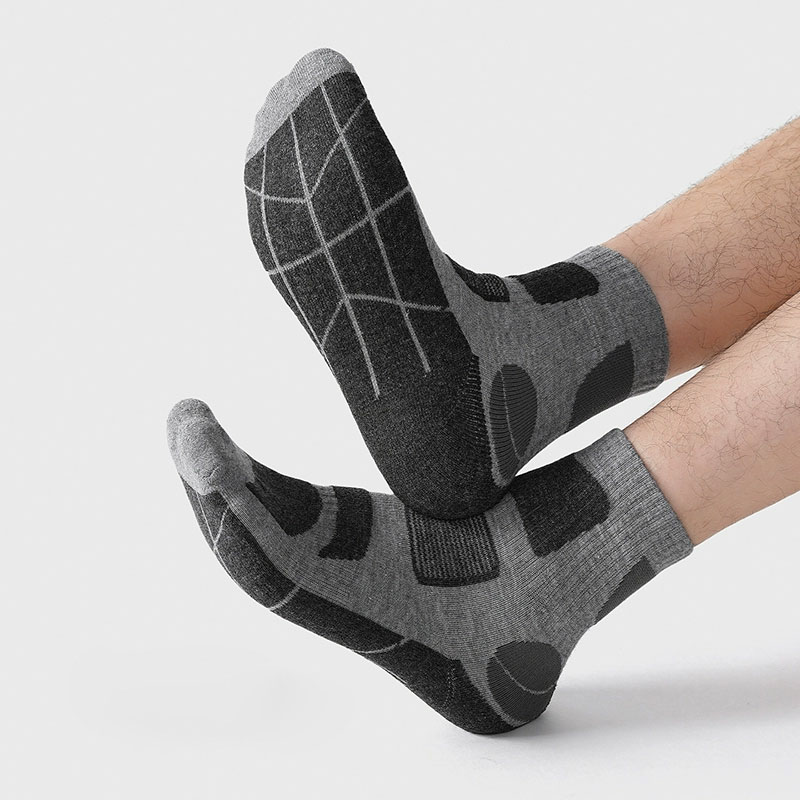
- Premium Performance: Reinforced with “thickened loops” and “reinforced knitting” in high-wear zones, or incorporating abrasion-resistant materials like nylon to prevent pilling and holes from forming prematurely.
3. Cushioning Protection, Reducing Foot Pressure
- Core Scenario: During hiking, the forefoot and heel endure dual impacts from body weight + backpack load, with stronger shocks during descents, often causing foot soreness and blisters.
- Premium Design: Features a “thickened looped cushioning layer” in high-stress zones like the ball of the foot, heel, and base of the toes to distribute pressure like an “insole.” The toe area incorporates extra space to prevent nail compression.
4. Snug Fit, No Slippage or Tightness
- Fit: Sock size must precisely match foot shape. The cuff, arch, and heel areas require “elastic compression design”—the “3D shaping” at the heel (e.g., Y-shaped heel) secures the sock in place, preventing slippage and wrinkles during hiking (creases are a primary cause of blisters).
- Comfort: Moderate elasticity at the cuff (too tight restricts circulation; too loose causes slippage). “Seamless toe construction” at the toe seam prevents friction against the skin.
5. Temperature Regulation for Diverse Environments
- Thermal Retention: In cold, high-altitude conditions, it must lock in foot warmth to prevent frostbite;
- Breathability: In hot, low-altitude environments, it must rapidly dissipate heat to avoid stuffiness.
- Premium Performance: Achieves “all-season comfort” through material combinations (e.g., wool + breathable synthetic fibers) rather than relying solely on thickness for warmth (excessive thickness can cause foot compression and reduce interior space).
6. Support and Stability, Enhancing Foot Power
- Key Features: The “elastic support band” at the arch (such as densely knit areas with added spandex) conforms to the arch’s curve, providing support to reduce arch soreness after prolonged walking. Sock cuff length (mid-calf or high-calf) should match hiking boots to prevent the boot collar from rubbing against the ankle.
2.Recommended Materials for Hiking Socks
A single material cannot meet the multifunctional demands of hiking socks; high-quality hiking socks are typically made from a blend of “natural fibers + synthetic fibers.”
| Material Type | Representative Material | Core Advantages | Potential Disadvantages | Hiking Scenario Fit |
|---|---|---|---|---|
| Natural Material | Merino Wool | 1. Excellent moisture wicking (can absorb up to 30% of its weight in moisture without feeling damp); 2. Superior warmth (retains insulation even when wet, better than cotton or regular wool); 3. Naturally antimicrobial (contains lanolin, reducing foot odor); 4. Soft and skin-friendly (unlike coarse regular wool) | 1. Pure wool has relatively low abrasion resistance; 2. Moderate drying speed when wet; 3. May slightly shrink after multiple washes | Mid-to-high altitude, cold environments (e.g., autumn/winter hiking, snow trekking) |
| Synthetic Material | Polyester | 1. Extremely fast sweat-wicking (2-3x faster than wool); 2. Highly durable and resistant to pilling; 3. Lightweight when dry, doesn’t become heavy when wet | 1. Poor moisture absorption (often blended with wool or cotton for better absorption); 2. Pure polyester may generate static and feels less skin-friendly | Low-altitude, hot, and humid environments (e.g., spring/summer hikes, short climbs) |
| Nylon | 1. Exceptional abrasion resistance and strength (most durable among common fibers); 2. Good elasticity and shape retention | 1. Poor moisture wicking and breathability; 2. Low insulation value | Typically used as a “reinforcement” in high-wear areas like heel and toe | |
| Spandex (Lycra) | 1. Excellent elasticity (can stretch 5-7x and recover well); 2. Enhances sock fit, snugness, and support | 1. No moisture-wicking, breathability, or warmth; 2. Must be blended with other fibers | Used as an “elastic component” in cuff, arch, and heel areas | |
| Blended Material | Wool + Polyester + Nylon + Spandex | Combines strengths: wool for moisture absorption and warmth, polyester for quick drying, nylon for durability, spandex for fit | No significant drawbacks; requires balanced composition | Suitable for most hiking scenarios (highest versatility) |
3.Optimal Material Composition for Hiking Socks (By Scenario)
Different mountaineering scenarios demand distinct functional priorities for socks, necessitating tailored adjustments to material composition.
1. High-Altitude / Low-Temperature / Winter Mountaineering (Focus on “Thermal Insulation + Moisture Wicking”)
- Core Requirements: Prioritize warmth while preventing foot moisture and frostbite;
- Recommended Blend: 60%-75% Merino Wool + 15%-25% Polyester + 5%-10% Nylon + 2%-5% Spandex;
- Rationale: High merino wool content ensures warmth and natural antimicrobial properties. Polyester accelerates moisture wicking (preventing prolonged dampness in wool). Nylon enhances heel/toe abrasion resistance. Spandex ensures snug fit without slippage.
2. Low Altitude / Warm / Summer Hiking (Focus on “Moisture-Wicking + Breathability”)
- Core Requirements: Rapid moisture wicking, breathable without stuffiness, prevents foot odor;
- Recommended Blend: 50%-65% Polyester + 20%-30% Merino Wool + 10%-15% Nylon + 2%-5% Spandex
- Rationale: High polyester content accelerates moisture wicking, while low wool content aids moisture absorption and provides antimicrobial properties (countering polyester’s stuffiness). Nylon enhances overall durability.
3. Short-distance Lightweight / Daily Hiking (Focus on “Comfort + Value”)
- Core Requirements: Balance comfort, durability, and affordability;
- Recommended Blend: Cotton 30%-40% + Polyester 30%-40% + Nylon 15%-20% + Spandex 2%-5%;
- Rationale: Cotton enhances skin-friendly comfort (minimal perspiration on short trips eliminates moisture concerns), while polyester and nylon ensure moisture-wicking and abrasion resistance at a lower cost than wool blends.
DIY SOCK offers comprehensive customization services, covering material selection, production processes, design solutions, and overall coordination. We have a professional team that can provide you with customized solutions. We support orders starting from one pair of samples. If you need custom hiking socks, please contact us for a quote and free design services.
Summary
Quality hiking socks are “function-first” gear, designed with a scientific blend of merino wool, polyester, nylon, and spandex to deliver comprehensive benefits: moisture-wicking, abrasion resistance, cushioning, and snug warmth. When selecting socks, avoid blindly chasing “pure wool” or “high price tags.” Instead, choose the appropriate material blend and thickness based on your specific hiking conditions to truly maximize their protective benefits for your feet.