easy to know
Which Material is Best For Basketball Socks
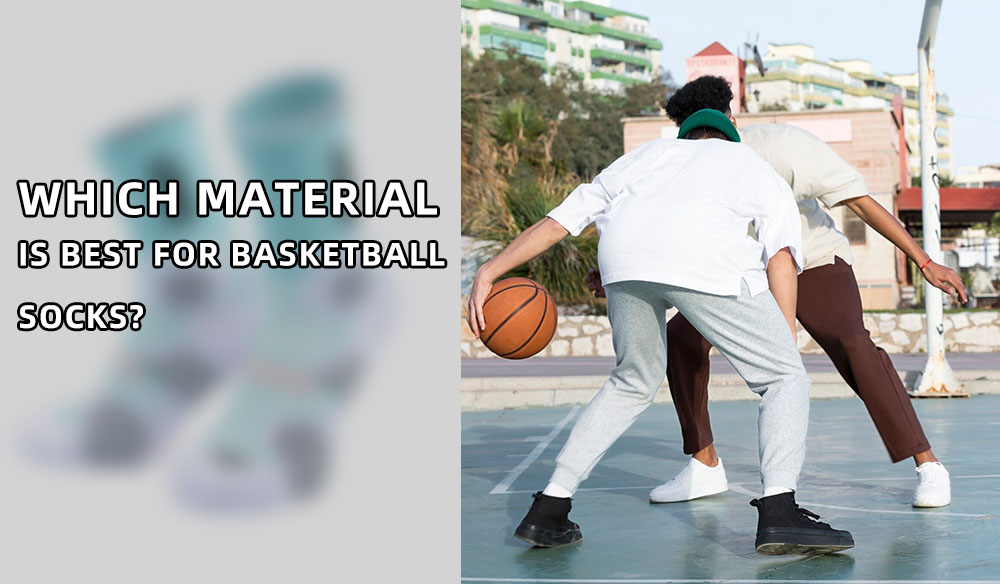
When playing basketball, the material selection of Basketball Socks should focus on the four core requirements of moisture absorption and perspiration, anti-slip and wear resistance, elastic support, and breathable comfort. It should reduce the friction between the feet and the inside of the shoes (to avoid blisters), and also cope with the humidity and heat caused by sweating during exercise, while providing basic support for the ankles and arches of the feet.
Content Quick View
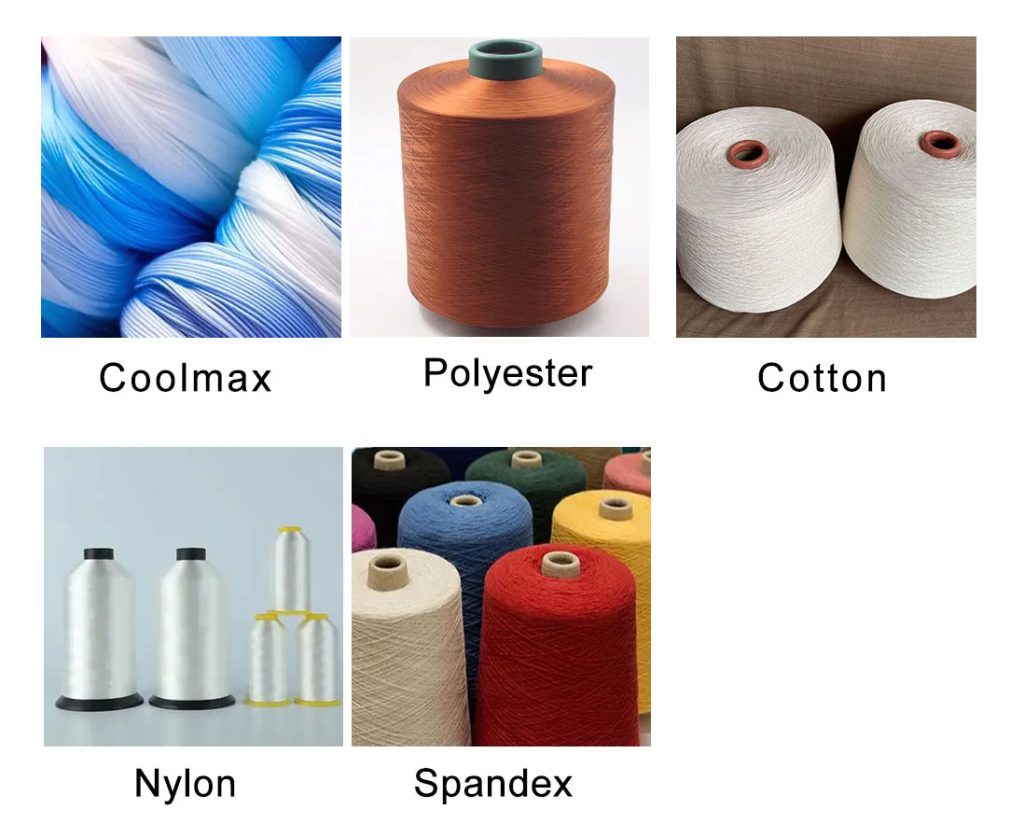
1. Recommended materials for Basketball Socks
| Material Type | Core Functions | Application Area / Function | Notes |
|---|---|---|---|
| Polyester | 1. Excellent moisture-wicking (quickly pulls sweat away from skin); 2. Wrinkle-resistant, durable, and maintains shape; 3. Dries quickly, keeps feet dry | Main sock body (highest proportion) | Pure polyester has average breathability; should be blended with breathable fibers (e.g., nylon, spandex) |
| Nylon | 1. Extremely abrasion-resistant (10x cotton, 2x polyester); 2. Good elasticity, resistant to breaking; 3. Lightweight, doesn’t add foot burden | Heel, toe, and sock tip (high-wear areas) | Poor moisture absorption; should be blended with moisture-wicking fibers (e.g., polyester); avoid using alone |
| Spandex (Lycra) | 1. High elasticity (can stretch 4–7 times original length, near 100% recovery); 2. Conforms to foot contours, provides support; 3. Prevents sock slippage | Sock cuff, arch, and ankle support zones | Content should be controlled (2%–5% optimal); too much causes tightness, too little reduces support |
| Combed Cotton | 1. Soft and skin-friendly, reduces friction; 2. Better moisture absorption than regular cotton, less prone to pilling | Inner layer of sock body (small amount added for comfort) | Content should not exceed 20%; otherwise, remains damp after absorbing sweat, increasing blister risk |
| Coolmax (Functional Polyester) | 1. Advanced moisture-wicking (four-channel structure accelerates sweat removal); 2. Better breathability than standard polyester | Main sock body (commonly used in premium basketball socks) | Higher cost; ideal for athletes with high sweat demands (e.g., intense training, summer games) |
2.Recommended Blend Ratios (Segmented by Scenarios)
The material ratio needs to be flexibly adjusted according to the actual intensity (daily leisure/high-intensity training/competition). The core principles are: the main body ensures moisture absorption and perspiration, the wear-resistant parts are enhanced, and the key parts are strengthened with elastic support.
- Basic (daily casual shooting, light training)
- Suitable for: 1-2 times a week of light combat and shooting practice, with low requirements for wear resistance and support
- Recommended Ratios:
- Polyester: 65%-70% (for basic moisture wicking)
- Nylon: 15%-20% (for improved heel/toe wear resistance)
- Spandex: 3%-5% (for basic elasticity around the cuff and arch)
- Combed Cotton: 5%-10% (for inner layer softness and friction reduction)
- Advantages: High cost-effectiveness, combining comfort and basic functions, suitable for novice or casual players.
- Advanced (medium to high intensity training, regular competition)
- Applicable scenarios: Actual combat and confrontation training more than 3 times a week, which requires enhanced wear resistance and support to reduce sports injuries.
- Recommended Mixing Ratios:
- Functional polyester (such as Coolmax): 60%-65% (quickly wicks away sweat and keeps you dry)
- Nylon: 20%-25% (thickens the heel/toe for increased wear life)
- Spandex: 4%-6% (arch support, ankle wrapping, and enhanced support)
- Combed cotton: 5%-8% (soft and comfortable, reduces odor)
- Advantages: High perspiration efficiency, wear-resistant and durable, elastic support of the arch and ankle can relieve sports fatigue.
- Professional model (high-intensity competition, professional-level training)
- Suitable for: professional events and high-intensity competitions (such as full-court 5v5 games), which require extreme functionality and fit to cope with prolonged exercise.
- Recommended Ratios:
- Professional moisture-wicking fibers (such as Coolmax EcoMade, polyester fibers + moisture-wicking modifiers): 65%-70% (instantaneous moisture absorption and rapid perspiration management)
- High-stretch nylon (such as nylon 66): 22%-28% (superior abrasion resistance and resistance to repeated stretching)
- Spandex: 5%-7% (zoned elastic design: high elasticity for anti-slip cuffs, strong arch support, and elastic ankle wrapping)
- Functional additives (such as antibacterial silver ions): 1%-2% (long-lasting antibacterial properties to prevent odor growth)
- Advantages: Full functionality, moisture absorption, wear resistance, and support all meet professional standards, suitable for core players or long-term high-intensity players
3.Additional selection suggestions (key details beyond the material)
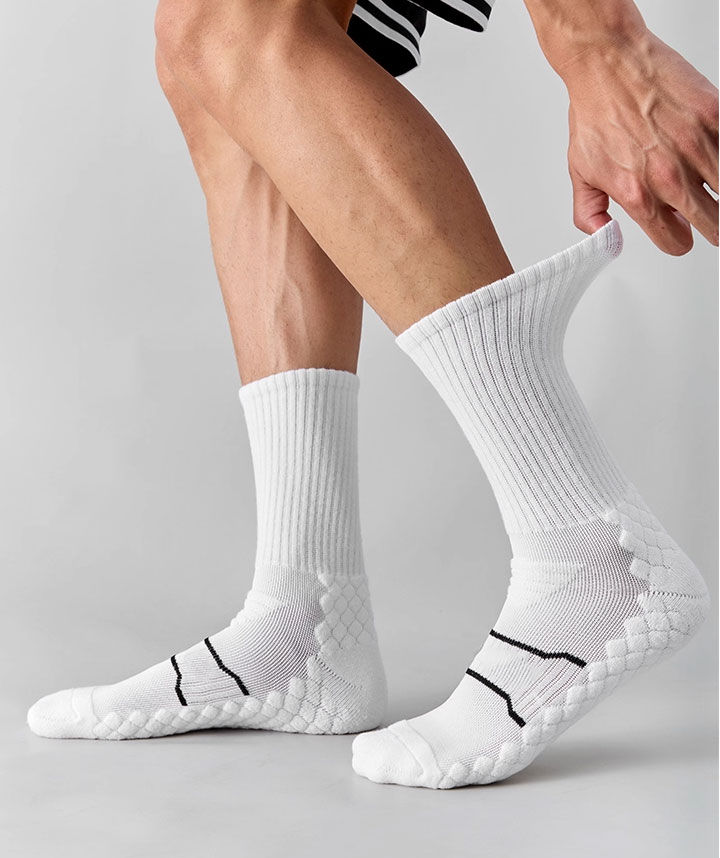
- Sock type and thickness: Give priority to tube socks (covering the ankles), which can protect the ankle skin and reduce friction on the shoe upper; choose “medium-thick” thickness (sock body 2-3mm). Too thin will easily rub the feet, and too thick will affect the fit inside the shoe.
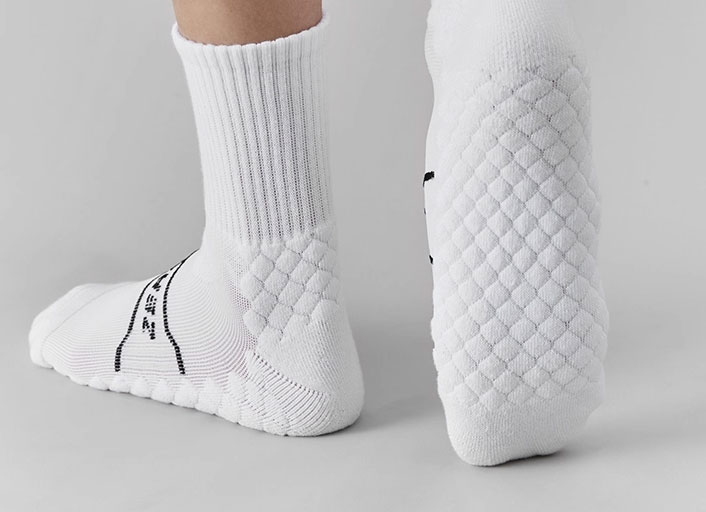
- Weaving technology: Choose a “terry sole weave” (raised terry on the sole) to enhance cushioning (reduce the impact of landing) and sweat absorption; the heel/toe needs a “reinforced weave” (double layer or thickened nylon) to extend the service life.
- Avoid misunderstandings: Do not choose “pure cotton socks” (they become damp and sticky after absorbing sweat, and are prone to blisters); do not choose “low-elastic spandex socks” (they lack support and are prone to slipping or wrinkling during exercise).
Pro Tip:
- Choose terry soles (raised loops on the sole): This provides added cushioning, reduces the impact of jumping and landing, and protects the sole.
- Check the sock cuff height: High-top socks (covering the ankle) are more suitable for those who need ankle support, while low-top socks are suitable for players who prefer flexibility.
- Check the arch compression band: Socks with a dedicated compression design can better wrap around the arch and reduce fatigue (especially for heavier players).