easy to know
Which Material is Best For Tennis socks?
In tennis, socks need to cope with frequent strides, sudden stops and changes of direction, and constant friction on the soles of the feet. The core requirements are concentrated in four dimensions: moisture wicking, wear resistance, arch support, and shock absorption. Similar to basketball socks, tennis socks also rely on “multi-fiber blends” to achieve functional complementarity. A single material cannot meet all needs.
Content Quick View
1. Recommended materials for tennis Socks
| Material Type | Core Function | Advantages and Disadvantages Analysis | Tennis Scenario Adaptability |
|---|---|---|---|
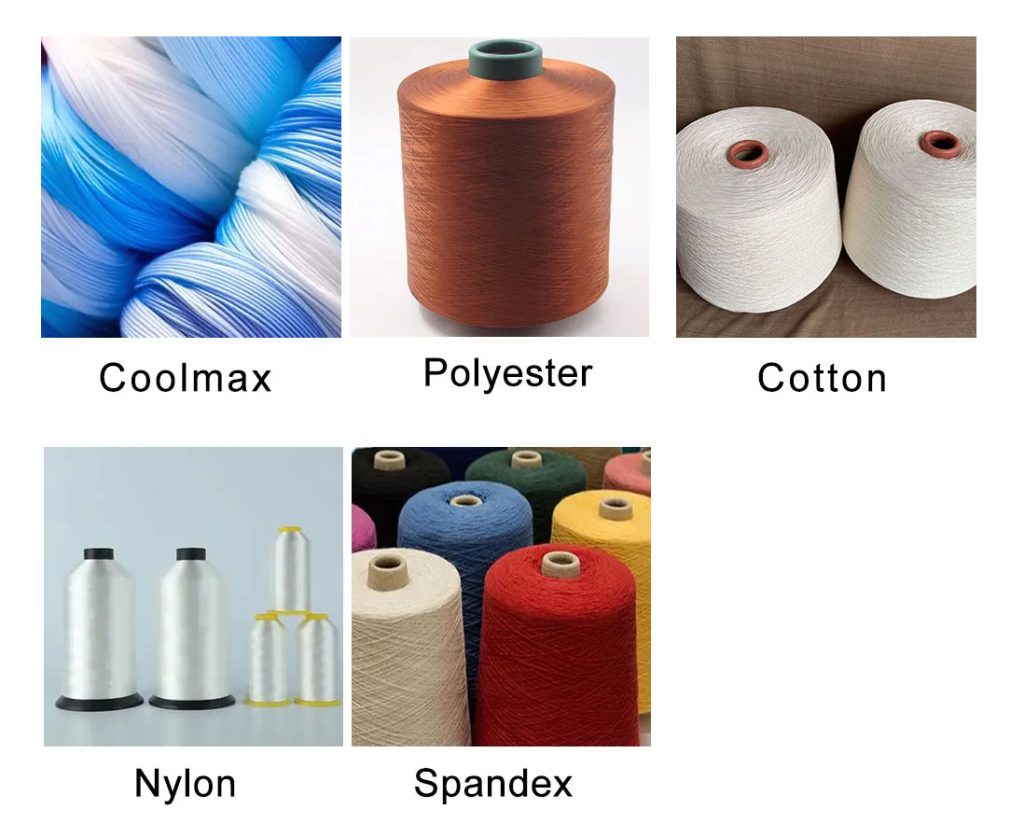
| Polyester | Quick sweat wicking, wrinkle and abrasion resistance, non-shrinkage | Advantages: The sweat evaporation rate is 5-8 times that of cotton, which can quickly export the moisture from the soles of the feet and prevent slipping; Disadvantages: Pure spinning can have a “chemical fiber stuffy feeling” | ★★★★★ (Core sweat wicking + basic abrasion-resistant layer) |
| Nylon | Ultra-high abrasion resistance, high strength, tear resistance | Advantages: The abrasion resistance is more than 10 times that of cotton, and it is the core reinforcing material for the “easily worn parts” of tennis socks; Disadvantages: Poor moisture absorption, requires combination with moisture-absorbing materials | ★★★★★ (Local abrasion-resistant reinforcing layer) |
| Combed Cotton / Long-staple Cotton | Moisture-absorbing and soft, skin-friendly and non-irritating | Advantages: Balances the “stiffness” of chemical fibers and assists in moisture absorption (first absorbs sweat and then is exported by polyester fiber); Disadvantages: Slow drying speed when wet, and pure spinning is prone to deformation | ★★★★☆ (Basic skin-friendly layer) |
| Spandex | High elasticity, snug fit, good recovery | Advantages: Provides tight support for the arch/ankle to prevent the socks from sliding and piling up during exercise; Disadvantages: Cannot be used alone and needs to be blended with other fibers | ★★★★★ (Support elastic layer) |
| Elastic Fiber (such as Lycra) | Improves elastic recovery and enhances fit | Advantages: More durable than ordinary spandex and can still maintain elasticity after multiple washings; Disadvantages: High cost, mostly used in mid-to-high-end tennis socks | ★★★☆☆ (Advanced elastic optimization, non-essential) |
2.Recommended Blend Ratios for tennis socks (Segmented by Scenarios)
Different tennis scenarios (hard court/clay/grass, high-intensity competition/daily training) require different sock functions
1. High-intensity competition/hard court competition ratio (prioritizing wear resistance + support)
- Polyester: 55%-65% | Maintains sweat-wicking properties, quickly directing sweat away from the soles of the feet (hard court play produces high perspiration, and moisture accumulation can easily lead to blisters). It also provides basic abrasion resistance for the overall fabric.
- Nylon: 18%-25% | Concentrated in the heel, toe, and toe seams (during a tennis stride, the heel strikes hard and the toes frequently hit the toe, making these three areas most susceptible to wear). Some high-end styles incorporate additional nylon on the “outer sole” (the stride support point) to extend the sock’s lifespan.
- Combed Cotton: 10%-15% | Balances a comfortable, skin-friendly feel, avoiding the stuffiness often associated with pure polyesters. It also assists in moisture absorption, keeping the soles of the feet dry and non-sticky.
- Spandex (or Lycra): 7%-10% | A high proportion of spandex ensures a snug fit around the arch and ankle. Tennis moves like lunges and quick turns require stable arch support. Insufficient elasticity can cause socks to bunch up, rubbing against the skin and causing discomfort.
Example: 62% Polyester + 22% Nylon + 12% Combed Cotton + 4% Spandex (Basic) / 60% Polyester + 20% Nylon + 10% Combed Cotton + 8% Lycra (Advanced)
Representative scenarios: professional competitions, high-intensity hard court confrontations, and frequent participation in tennis tournaments
2.Daily Training / Clay / Grass Pairing (Balanced Comfort + Performance)
- Polyester: 45%-55% | Maintaining core wicking properties, the proportion is slightly lower than in competition-grade shoes, minimizing the “harsh” feel of synthetic fibers.
- Combed Cotton/Long-staple Cotton: 25%-35% | Increasing the cotton content improves moisture absorption and softness (training sessions typically last 1-2 hours, requiring a more comfortable, next-to-skin feel). Long-staple cotton is finer than regular combed cotton and suitable for those with sensitive skin.
- Nylon: 12%-18% | Still featuring abrasion-resistant reinforcements at the heel and toe (clay/grass surfaces cause less wear than hard surfaces), keeping costs down without sacrificing durability.
- Spandex: 5%-8% | Maintaining a base of elasticity to prevent slippage during training and provide slight arch support (competition-level extreme fit is unnecessary during training; moderate elasticity provides greater comfort).
Example: 50% polyester + 30% long-staple cotton + 15% nylon + 5% spandex
Recommended for: Daily training, clay/grass court practice, and 2-3 tennis practice sessions per week.
3. Entry-level/casual tennis match (budget priority + basic features)
- Polyester: 40%-50% | Maintains core moisture-wicking properties, avoiding the “slippery” problem of pure cotton socks when wet, meeting entry-level sweat needs.
- Cotton (Non-Combed): 35%-45% | Using ordinary cotton instead of combed cotton reduces costs. While it dries slightly slower after absorbing moisture, it can meet the needs of low-intensity exercise.
- Nylon: 8%-12% | Restricts basic wear resistance to the heel and toe (to prevent wear after just one or two wears), eliminating the need for additional reinforcement in other areas and controlling costs.
- Spandex: 3%-5% | Provides basic elasticity to prevent socks from bagging or slipping. (Spandex content below 3% can cause socks to lose their shape after washing.)
Example: 45% polyester + 40% cotton + 10% nylon + 5% spandex
Recommended for: Beginners learning tennis, casual play, and occasional practice with friends.
3.Tips for avoiding pitfalls: These materials/ratios are not suitable for tennis socks
- 100% cotton socks: Absolutely not recommended! Cotton absorbs sweat, becomes heavy and damp, and can easily slip against the soles of your feet (causing friction between your feet and the inside of your shoes during sudden stops in tennis, increasing the risk of blisters). They also dry very slowly and can easily harbor odor after training.
- Non-nylon-reinforced socks: Tennis wears heels and toes much faster than normal. Non-nylon-reinforced socks typically wear through after 3-5 wears, making them extremely inefficient and unsuitable for hard-court competition.
- Spandex content less than 3%: Insufficient elasticity can cause socks to slip off the ankle and accumulate against the arch of the foot during exercise, affecting movement continuity and potentially causing redness and abrasions.
DIY SOCK offers comprehensive customization services, covering material selection, production processes, design solutions, and overall coordination. We have a professional team that can provide you with customized solutions. We support orders starting from one pair of samples. If you need custom sport tennis socks, please contact us for a quote and free design services.
Summary
According to the above material ratio and purchasing skills, you can not only meet the functional needs of tennis, but also take into account comfort and durability, and avoid affecting your sports state due to inappropriate socks.