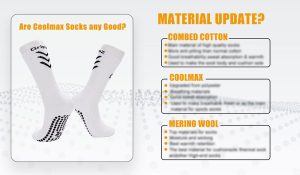
easy to know
Which Material is Best For cycling Socks
High-quality cycling socks must balance four core requirements: moisture-wicking, durability, elasticity and fit, and breathability. Material selection should center on this goal while adjusting the blend based on season (breathability for summer / warmth for winter) and riding intensity (daily commuting / long-distance off-road).

Content Quick View
1. Recommended materials for cycling Socks
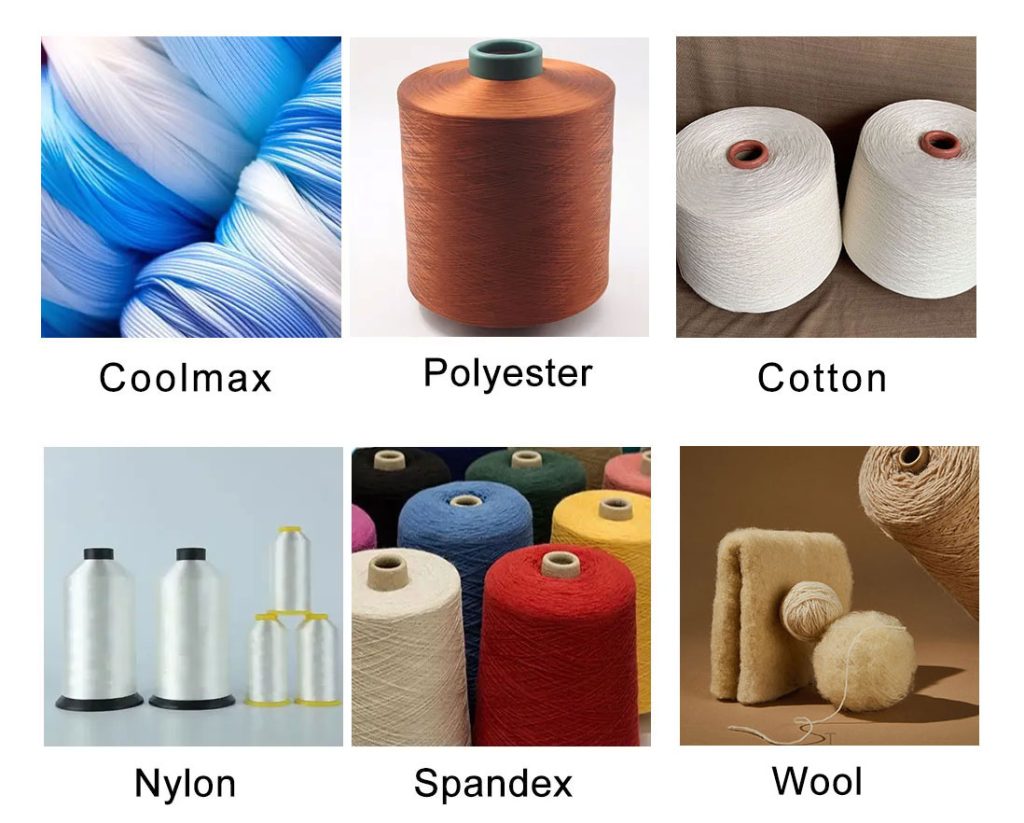
1.Coolmax Fiber
- Benefit: Excellent moisture-wicking properties, quickly wicking away sweat from your feet to keep them dry.
- Recommended Ratio:Summer/High-Intensity Cycling: 70%-85% Coolmax (all Coolmax socks);
- Blended: Coolmax should comprise at least 50% (e.g., Coolmax + nylon + spandex).
2.Nylon (Polyamide)
- Purpose: Enhances abrasion resistance and durability, extending the life of socks.
- Recommended ratio: 15%-30% (blended with Coolmax or wool)
3.Spandex (Lycra, Spandex)
- Purpose: Provides elasticity, ensuring the socks fit snugly and reducing friction.
- Recommended ratio: 5%-10% (for increased elasticity and comfort)
4.Merino Wool
- Benefits: Provides excellent winter warmth, is naturally antibacterial, and has moisture-wicking properties.
- Recommended blend: 50%-70% (commonly used in winter cycling socks, such as 61% merino wool, 29% nylon, and 10% spandex).
5.Polyester Fiber (Polyester)
- Benefits: Lightweight, abrasion-resistant, and suitable for quick-drying summer needs.
- Recommended Mixing Ratio: 20%-30% (blended with Coolmax)
2.Recommended Blend Ratios for cycling socks (Segmented by Scenarios)
1. Summer commuting/short-distance cycling (core needs: cool and quick-drying)
- Suitable for use in temperatures above 25°C, with single rides of 1-2 hours, primarily for urban commuting and leisure riding.
- Recommended Ratio:60%-70% modified polyester fiber (such as Coolmax, Thermolite) + 20%-25% nylon (polyamide) + 3%-5% spandex
2. Long-distance competitive/high-intensity cycling (core requirements: wear resistance + support)
- Suitable for rides lasting more than three hours, mountain climbing, or competitive cycling, where durability and stability are critical.
- Recommended Ratio:Polyester (regular high-stretch) 50%-60% + Nylon 30%-35% + Spandex 5%-8%
3. Winter warm cycling (core requirements: warmth + antibacterial)
- Suitable for winter outdoor cycling in temperatures between 5°C and 15°C, where you need to balance warmth with a cool, sweat-free ride (to avoid overheating and subsequent colds).
- Recommended Fabric Ratio:Merino wool (combed) 30%-40% + modified polyester 40%-50% + nylon 10%-15% + spandex 3%-5%
3.Tips for avoiding pitfalls: These materials/ratios are not recommended
- Pure cotton cycling socks: Absolutely not! Cotton absorbs moisture and clings to the skin, drying very slowly. It can easily cause blisters after long rides and isn’t very durable.
- Summer cycling socks with over 50% wool: Wool’s warmth can make summer socks feel stuffy, and pure wool or high-wool socks tend to shrink and lose their shape.
- Long-distance socks with less than 15% nylon: Lack abrasion resistance, pilling after just one or two high-intensity rides, and a short lifespan.
- Socks with less than 3% spandex: Lack elasticity, making them prone to slipping down during cycling and requiring frequent adjustments, which can negatively impact the riding experience.
DIY SOCK offers comprehensive customization services, covering material selection, production processes, design solutions, and overall coordination. We have a professional team that can provide you with customized solutions. We support orders starting from one pair of samples. If you need custom sport cycling socks, please contact us for a quote and free design services.
Summary
- For spring and summer, choose a three-piece suit of “Coolmax + Nylon + Lycra”
- For autumn and winter, choose the golden ratio of “Merino Wool + Nylon + Lycra”. You can then fine-tune the ratio according to whether you are competing or traveling long distances.