
easy to know
Common International Certificates For Socks
The certification of exported socks must be determined based on the regulations of the target market and customer requirements, with a focus on three core areas: “access safety, environmental compliance, and functional verification.” There are significant differences between mandatory and mainstream voluntary certifications in different regions.
Content Quick View
1. EU market (including the UK) core certifications for socks
The EU has strict requirements for textile imports, focusing on chemical substance control and ecological safety, which are the basic thresholds for exporting to Europe.
- REACH Regulatory Compliance (Mandatory)
- Core requirements: Control over 2,300 chemical substances on the EU market. Socks must ensure they do not contain restricted substances listed in Annex 17 (e.g., cadmium ≤ 100 ppm, nickel release ≤ 0.5 μg/cm²/week, specific phthalates prohibited). ; if “Substances of Very High Concern (SVHC)” are used and the concentration of any single substance is ≥0.1%, notification must be submitted to the European Chemicals Agency (ECHA).
- Applicable scenarios: All socks exported to the EU (mandatory for both adult and children’s styles), no separate certificate required, but a third-party testing report compliant with REACH requirements (e.g., issued by SGS or Intertek) must be provided.
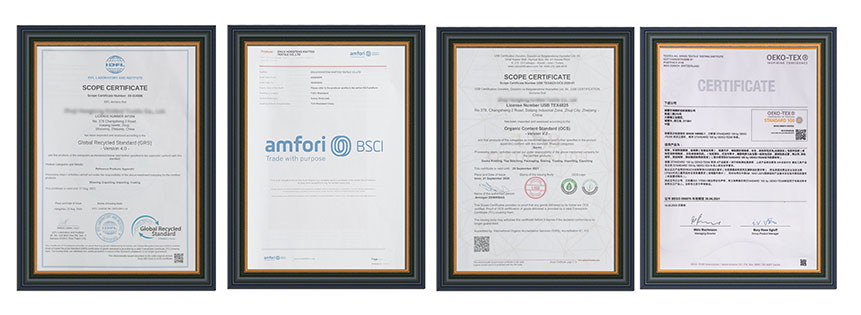
- OEKO-TEX® Standard 100 (voluntary, but essential for mainstream markets)
- Core requirements: Test for more than 100 harmful substances (heavy metals, allergenic dyes, pesticide residues, formaldehyde, etc.). Socks must comply with the “Class II (direct skin contact)” or “Class I (infant socks, 0-36 months)” standards.
- Advantages: Globally recognized, can be printed directly on product tags to enhance consumer trust, and is a common requirement for entering European supermarkets (such as Primark and Zara).
- BSCI certification (voluntary, but often required by customers)
- Core requirements: Social responsibility standards led by EU retailers, controlling labor rights (prohibition of child labor, reasonable wages), workshop safety, wastewater treatment, etc. in sock factories, which must be verified by a third party (such as SGS, BV).
- Applicable scenarios: When connecting with major European brands or supermarkets (such as Carrefour and Metro), this is almost a mandatory prerequisite.
2. Core Certification for the US Market
The US focuses on “product safety,” especially for children’s products, and has mandatory requirements for clarity.
- CPSIA certification (mandatory for children’s socks)
- Core requirements: Control lead and phthalates in children’s socks (12 years old and under). Lead content ≤ 100 ppm. Six phthalates (such as DEHP, DBP) are prohibited. A third-party test report (issued by a CPSC-approved laboratory) must be provided.
- Note: Adult socks are not subject to mandatory CPSIA requirements, but must comply with the Federal Trade Commission (FTC) “labeling compliance” (such as fiber content labeling and country of origin labeling).
- OEKO-TEX® Standard 100 (voluntary, mainstream)
- Effect: Although not mandatory, US consumers are highly concerned about “ecological safety.” Obtaining this certification can enhance product competitiveness, especially when entering mid- to high-end channels such as Nordstrom and Target.
- FDA registration (mandatory in specific circumstances)
- Applicable scenarios: If socks claim to have “medical functions” (such as antibacterial treatment or wound healing), they must be registered with the US Food and Drug Administration (FDA) and managed as medical devices (usually Class 1). Ordinary antibacterial socks do not need to be registered, but must provide antibacterial function test reports (such as AATCC 100 standard).
3.Core certification for Asian markets (Japan, South Korea)
- Japanese market
- JIS L 1041 (Textile Safety Standards) (voluntary, but often requested by customers): Similar to China’s GB 18401, this standard specifies indicators such as formaldehyde, pH value, and color fastness, and is a standard audit requirement for Japanese brands (such as Uniqlo).
- Food Hygiene Law compliance (mandatory, for infant socks): The use of migratory fluorescent whitening agents is prohibited, and corresponding test reports must be provided. If the socks contain rubber components (such as anti-slip rubber), the rubber must be tested for harmful chemicals.
- OEKO-TEX® Standard 100 (voluntary, high-end market): Japanese department stores (such as Isetan) often require this certification for imported socks to demonstrate product safety.
- South Korean market
- KCS 1513 (Textile Safety Standard) (Mandatory): Korea’s official textile safety standard, which requires socks to meet the criteria for “direct skin contact” (Class B) and to be tested and certified by a local Korean laboratory (such as KOTITI).
- REACH-like regulations (K-REACH) (mandatory): Controls chemical substances in the Korean market, requiring compliance with regulations similar to those of the EU REACH. It is necessary to ensure that socks do not contain prohibited/restricted substances, which is a basic requirement for exporting to Korea.
4.Globally recognized functionality / material certification (enhancing competitiveness)
Although this type of certification is not mandatory, it proves the special value of the socks and helps open up the high-end market.
- GOTS (Global Organic Textile Standard): If socks are made from organic cotton and organic wool (≥95%), GOTS certification allows them to enter the European and American “organic product” channels (such as Whole Foods).
- GRS (Global Recycling Standard): Socks containing recycled polyester/nylon (≥20%) that are GRS-certified meet the “sustainability” requirements of European and American brands (such as Adidas and H&M’s eco-friendly lines).
- WOOLMARK (Wool Mark): Socks containing pure new wool (≥50% for standard WOOLMARK, ≥93% for WOOLMARK GOLD) are the key credential for entering the global high-end wool sock market (such as European outdoor brands).
- Antibacterial Function Test Report (e.g., SGS, AATCC 100 Standard): If claiming “antibacterial and odor-resistant,” a third-party report must be provided to prove that the inhibition rate against Escherichia coli and Staphylococcus aureus is ≥90%, to avoid penalties for “false advertising” in the target market.
Summary
For specific certification procedures or document templates, please consult a professional agency or refer to the regulations of the target market.