easy to know
What are the best socks for outdoor hiking/mountaineering?
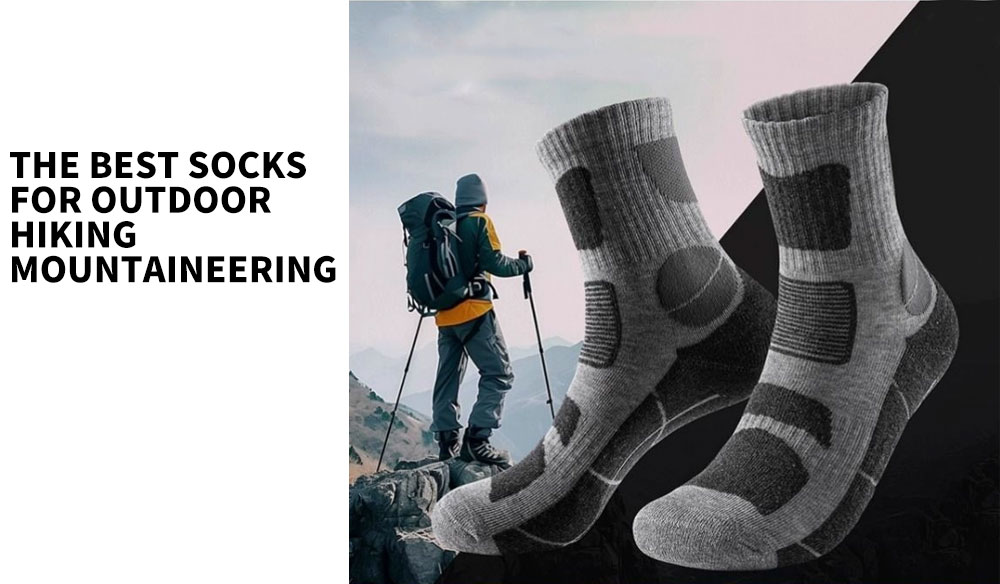
When hiking or climbing outdoors, a pair of proper socks is essential for foot comfort and safety. They serve not only as a cushioning layer between your shoes and feet but also as crucial gear for keeping your feet dry and preventing blisters.
Content Quick View
Sock Selection for Common Hiking Scenarios
| Use Case | Recommended Materials | Thickness & Functional Focus | Special Notes |
|---|---|---|---|
| Light-duty Daily Use / Summer Lightweight Hiking | Merino wool blends, synthetic fibers (e.g., CoolMax), bamboo fiber | Lightweight: Emphasis on moisture-wicking and breathability | Avoid 100% cotton socks—they retain moisture, dry slowly, and can cause blisters or frostbite. |
| Multi-day Backpacking / Mid-to-Low Altitude Trekking | Merino wool blends + synthetic fibers | Midweight to Heavyweight: Reinforced padding in high-impact zones for cushioning and support | Socks with higher wool content (e.g., >50%) are generally more comfortable and durable. |
| Cold Conditions / Winter / High Altitude | Merino wool blends + insulating fibers (e.g., Thermolite) | Heavyweight & Extra Thick: Full-foot warmth with extended cuff height | Consider pairing with a thin, quick-drying liner sock to enhance moisture management and insulation. |
| Wet/Rainy Conditions / Water Crossings | Waterproof socks (with waterproof breathable membrane) | Waterproof Priority: Typically lined with merino wool to keep feet dry inside | Waterproof socks have limited breathability—may trap sweat in warm weather or with non-breathable footwear. |
Considerations for Choosing Outdoor Socks
- Focus on key construction: Professional hiking socks typically feature reinforced padding in high-wear areas like the sole, heel, and toe. A precise arch support design ensures a snug fit, effectively preventing slippage during activity. The Y-shaped heel construction also provides superior foot contouring.
- Inspect the seam details: The seam at the toe box must be smooth and seamless, ideally using seamless or bone-free stitching techniques. This is crucial for preventing toe abrasions.
- Ensure a snug fit: Socks should conform perfectly to your foot shape—neither too tight to restrict blood flow nor too loose to cause wrinkles and friction. When purchasing, be sure to check the brand’s size chart.
Tips for Avoiding Pitfalls + Practical Advice
1. 3 Absolute Pitfalls to Avoid
- Hiking in pure cotton socks: Absorbs sweat but doesn’t wick it away, leaving feet damp, cold, and sticky, with a blister rate over 90%.
- Socks should be larger than shoes: Socks that are too large may bunch up and rub against the skin, while socks that are too small may constrict the feet and impair blood circulation. (When selecting socks, choose based on your usual shoe size. During fitting, ensure toes are not compressed and heels do not slip out.)
- Focusing solely on thickness without considering fit: For instance, wearing thick socks in summer leads to sweaty, chafed feet; wearing thin socks in winter leaves your feet cold with no cushioning.
2.Practical Tips
- Bring an extra 1-2 pairs of socks: Changing into dry socks during long hikes significantly reduces the risk of blisters.
- Bring your hiking boots when trying on socks: When purchasing socks, it’s best to bring your hiking boots. Walk a few steps during the fitting to ensure the socks fit snugly within the boots (no slipping or pinching).
- Daily Care: Follow the product’s washing instructions. Generally, to maintain the elasticity and functionality of the socks, it is recommended to wash them gently in lukewarm water and avoid prolonged exposure to direct sunlight.
Top 5 Professional Outdoor Socks of 2025
Based on 2025 outdoor gear reviews (such as Outdoor Gear Magazine and Liangbu Road Outdoor flagship store) and user feedback, the following brands stand out for their performance, durability, and value for money.
1. Smartwool (USA)
- Core Advantage: Merino Wool Specialist (using 100% Australian Merino wool), offering superior warmth, antibacterial properties, and moisture-wicking performance.
- Recommended Style: Smartwool PhD Outdoor Medium Crew (midweight hiking socks, ideal for spring and fall long-distance treks);
- Price: Approximately 50-100 usd per pair (moderate value for money, but outstanding performance)
2.X-SOCKS (Switzerland)
- Core Advantages: Multiple technology patents (such as the “Airflow Regulation System” and “3D Bionic Socks”), with balanced cushioning, breathability, and support performance.
- Recommended Style: X-SOCKS Hiking Expedition (Expedition-grade hiking socks, suitable for winter high-altitude mountaineering);
- Price: Approximately 40-80 usd per pair (high value for money, suitable for professional players).
3.DexShell (UK)
- Core Advantage: Leading waterproof and breathable technology (utilizing Porelle membrane), ideal for activities like river tracing and wading.
- Recommended Style: DexShell Wading Pro (Stream-crossing socks, ideal for summer wading hikes);
- Price: Approximately 300-60 USD per pair (high value for money, suitable for short-distance wading).
4.UTO (China)
- Core Advantages: A professional Chinese outdoor brand offering exceptional value for money (priced at 1/2 to 2/3 of European and American brands).
- Recommended Style: UTO Silver Ion Hiking Socks (Moisture-wicking & Quick-drying + Antibacterial, ideal for summer lightweight hiking);
- Price: Approximately 10-20 usd per pair (exceptionally high value for money, ideal for beginners).
5.Aonijie(china)
- Core Advantage: outdoor Sock Specialist (featuring American Invista COOLMAX® fabric), ideal for individuals with excessive foot perspiration.
- Recommended Style: Aonijie crew outdoor Sock (Anti-Slip & Shock Absorption + Breathable, Ideal for Summer Hiking);
- Price: Approximately 15-30 usd per pair (offering great value for money, suitable for the average player).
Summary
When selecting hiking/mountaineering socks, prioritize three core requirements: moisture-wicking, cushioning/shock absorption, and thermal support. Opt for merino wool blended with COOLMAX® fabric. Choose styles based on conditions (temperature, humidity, terrain)—e.g., quick-dry socks for summer, thick wool socks for winter. Ensure proper sizing, always try them on, and maintain them properly.