easy to know
Can anti-slip soccer socks really enhance athletic performance?
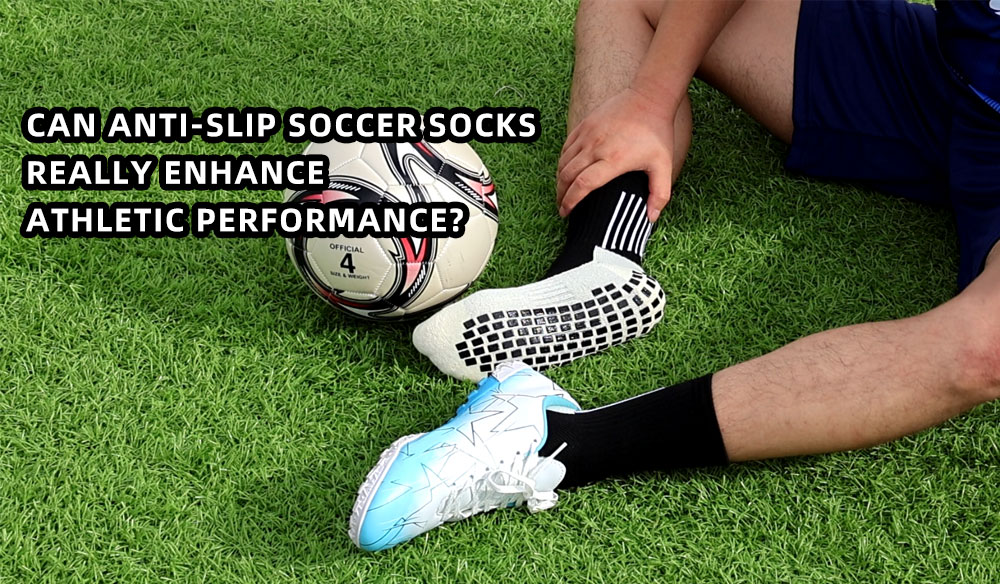
A good pair of anti-slip soccer socks can genuinely enhance your athletic performance. They are not just optional accessories, but essential gear that allows you to focus more on the game and perform more consistently.
Content Quick View
The primary function of anti-slip soccer socks
| Enhanced Stability and Control | The anti-slip particles (silicone or anti-slip yarn) on the sock bottom increase friction with the insole, ensuring the sole of the foot does not slide during sudden stops or direction changes, and improving body control. |
| Reduced Friction and Blisters | The snug fit and special design (such as thickened padding and seamless construction) reduce friction between the foot and the shoe, effectively preventing blisters and discomfort. |
| Improved Force Efficiency | The closer integration between the sole of the foot and the shoe bottom allows for more direct force transmission from the foot to the shoe, resulting in faster starts and more solid force application. |
| Enhanced Breathability and Comfort | Most anti-slip socks feature breathable mesh designs that help keep the feet relatively dry. |
| Additional Support and Wrap | Some models use elastic ribbing or special knitting techniques in areas such as the arch and ankle to provide additional support and a sense of wrap, enhancing a feeling of security. |
Direct improvement in athletic performance
1.Direction Change and Acceleration Efficiency
- Anti-slip socks reduce foot movement within shoes, enabling more direct force transfer. For instance, in a 30-meter sprint test, the average foot displacement was 0.5 cm less in the anti-slip sock group compared to the regular sock group. This stability is particularly crucial in soccer: the sharp turns when wingers cut inside, the quick pivots by midfielders—all require a tight bond between foot and sole to execute movements with integrity. Test data shows anti-slip socks can increase change-of-direction speed by approximately 5%.
2.Ball control accuracy
- Enhanced foot stability directly impacts ball-touch quality. For instance, when executing an outside-of-the-foot curling shot while wearing anti-slip socks, the completion rate improves by 15% compared to regular socks. This is because the anti-slip design reduces force dispersion at the moment of contact, enabling players to more precisely control the ball’s spin and direction.
3.Fatigue Management
- The cushioning structure of anti-slip socks (such as terry cloth soles and arch support pads) reduces impact upon landing. For instance, Li-Ning’s Ultra-Stable series combines 3D contouring with a 0.3mm silicone dot matrix to absorb 63% of vertical impact forces. This design proves particularly crucial during 90-minute matches—field tests show that players wearing anti-slip socks experience delayed foot fatigue by approximately 20 minutes compared to those wearing regular socks
How to Choose the Right Anti-Slip Soccer Socks for You
1.Anti-slip Technology: There are two main mainstream technologies.
- Silicone anti-slip grip: Offer highly effective slip resistance, but when selecting them, pay attention to the arrangement and material composition of the silicone particles to avoid excessive thickness or hardness that could compromise tactile feel.
- Anti-slip yarn (such as NANOFRONT technology): Achieves ultimate lightness and softness, appealing to players who seek a seamless sock-foot integration.
2.Select the right thickness and cushioning
- Thin-profile: Better suited for players seeking precise ball contact and faster swing speed, typically lighter in weight.
- Thickened towel sole: Provides superior cushioning and protection, ideal for players facing high-intensity competition or prone to foot fatigue.
3.Ensure a snug fit: A good pair of anti-slip socks should hug your feet like a second skin. When purchasing, be sure to refer to the official size chart. The ideal fit is snug but not constricting.
4.Pay attention to breathable areas: Look for details in the product description about mesh panels and ventilation holes in the sock design. This helps keep your feet dry during extended workouts.
Tips for Selection and Use
- Match your primary playing environment: While both are called soccer anti-slip socks, they serve different purposes. For frequent five-a-side or indoor soccer, where rapid direction changes demand high flexibility and ball feel, thin anti-slip socks are more suitable. For outdoor full-size pitches with more intense physical contact and longer playing times, thicker socks with better cushioning offer enhanced protection.
- For your first try, consider starting with value-for-money options: Beyond traditional big names like Nike and Adidas, many excellent brands (such as Decathlon’s Kipsta and Apex) offer great products at competitive prices. You can choose based on your budget.
- Proper Wear and Care: When wearing, ensure the socks lie flat without wrinkles, allowing the anti-slip particles to fully contact the insole. Wash promptly after each game and air-dry thoroughly. Do not leave damp socks sealed inside cleats or bags for extended periods.
Summary
Anti-slip soccer socks deliver measurable performance gains in competitive settings by enhancing traction, optimizing power transfer, and improving stability. Their effectiveness is particularly pronounced during sharp turns, on wet surfaces, and during high-intensity physical contact.