easy to know
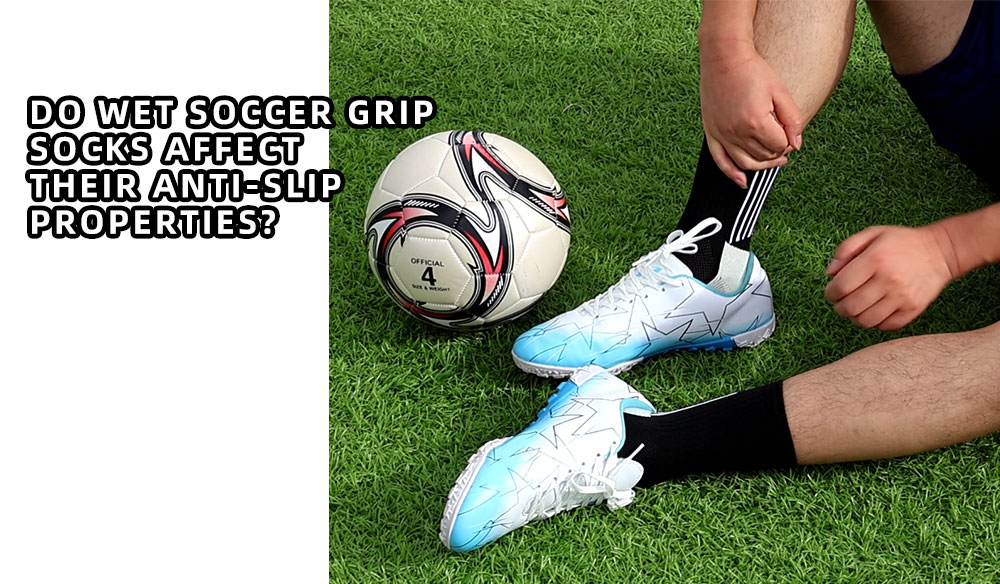
Do Wet Soccer Grip Socks Affect Their Anti-slip properties?
Yes, and the impact is quite significant. The core function of soccer grip socks relies on their physical structure when dry. Sweat directly disrupts this structure and its contact with both the sneakers and the skin.
Content Quick View
Why is it affected?
- Anti-slip particle failure: The silicone or rubber particles on the bottom of anti-slip socks rely on dry surfaces to generate friction with the inner sole of sneakers. Sweat forms a water film between the particles and the shoe sole, effectively adding a layer of “lubricant” that directly reduces the friction coefficient.
- Reduced sock fit: When dry, socks adhere snugly to the foot. However, when wet, increased weight or material deformation can cause shifting and wrinkling. This prevents the anti-slip particles from aligning precisely with the pressure points on the sole, further diminishing slip resistance.
- Reduced material friction: After absorbing sweat, the main fabric of the socks becomes softer and slippery, leading to decreased friction against the skin. This can cause the feet to slide within the socks, rather than the socks and sneakers working together to provide traction.
The direct consequences
- Foot slipping inside the shoe: This is the most immediate risk. During sudden stops, changes of direction, pivots, shots, and similar movements, the foot may experience unwanted displacement within the shoe.
- Increased risk of blisters and friction injuries: Wet socks have a significantly higher friction coefficient against the skin than dry socks, making it very easy for blisters to form on the feet—especially on the heels, soles, and toes.
- Impact on power generation and stability: Players may unconsciously hold back from exerting full force due to fear of slipping, or experience technical movement distortion caused by unstable footing, thereby affecting the accuracy of passing and shooting.
- Increased risk of injury: Instability within the shoe compromises ankle support, heightening the risk of sprains during intense physical contact.
Recommendations for Response
- Choose quick-drying materials: Opt for anti-slip socks containing quick-drying components like polyester or nylon. These materials efficiently wick away sweat and delay moisture buildup.
- Replace promptly: If training or competition sessions are lengthy, it is recommended to change into a fresh pair of dry, non-slip socks during halftime to immediately restore traction performance.
- Use with anti-slip spray: Apply professional sports anti-slip spray to the soles of anti-slip socks or the insoles of sneakers. The chemical adhesion enhances slip resistance and partially counteracts the effects of sweat.
- Prepare multiple pairs of socks for rotation: This is the most effective method. During breaks in training or competition (such as halftime), immediately change into a fresh, dry pair of non-slip socks. You’ll feel a huge difference right away.
Summary
Sweat-soaked socks are the arch-nemesis of anti-slip socks. To maintain optimal traction, comfort, and athletic performance, the key strategy is to keep your feet and socks as dry as possible. During prolonged or high-intensity activities, swapping in a fresh pair of dry socks midway is a simple yet highly effective professional habit.
DIY SOCK offers comprehensive customization services, covering material selection, production processes, design solutions, and overall coordination. We have a professional team that can provide you with customized solutions. We support orders starting from one pair of samples. If you need Custom pilates grip Socks, please contact us for a quote and free design services.