
easy to know
Which Material is Best For Running Socks
The core requirements for good running socks are moisture-wicking, breathability, durability, and elastic fit. The choice of materials should revolve around these key points. Pure, single-material socks (such as those made entirely of cotton) are generally not recommended because they are slow to dry after absorbing moisture and prone to causing blisters due to friction. Blended materials are the optimal choice.
Content Quick View
1. Recommended materials for running socks
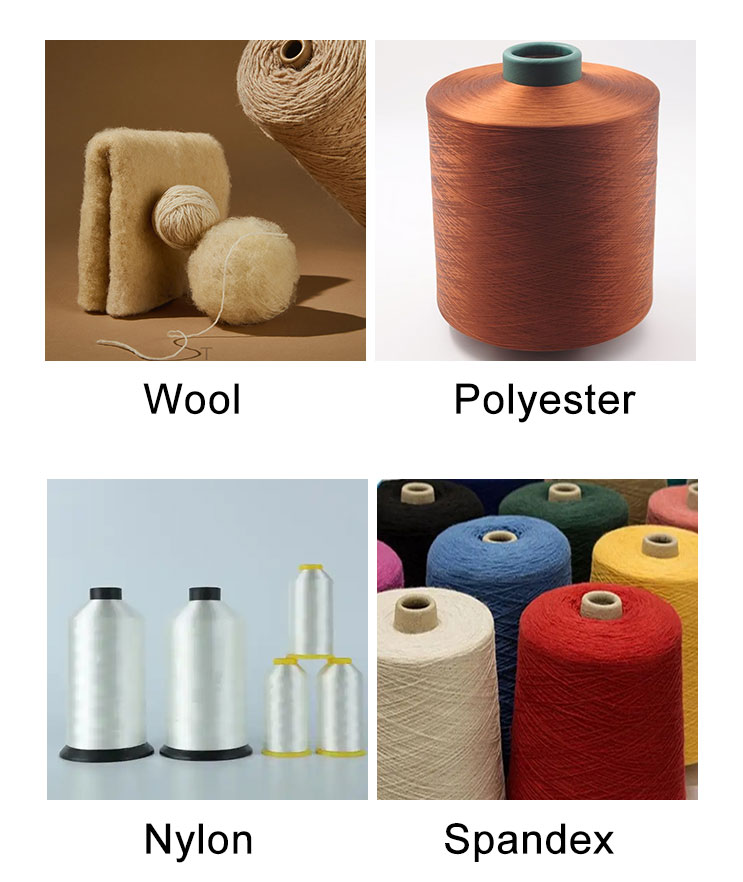
- Merino Wool (Preferred Option)
- Advantages: Naturally moisture-wicking (can absorb up to 30% of its own weight in moisture without feeling damp), antibacterial and odor-resistant (reduces unpleasant odors after prolonged running), temperature-regulating (keeps feet warm in cold weather and breathable in hot weather), and soft against the skin, minimizing friction.
- Note: Choose Merino wool that has undergone special treatments (such as shrink-resistance and anti-pilling) to prevent shrinkage or deformation after washing.
- Polyester (Dacron)
- Advantages: Among synthetic fibers, it excels in moisture-wicking performance, allowing moisture to quickly evaporate through the fiber surface and keeping feet dry; highly durable, extending the lifespan of socks (especially in high-wear areas like heels and toes).
- Note: Pure polyester has slightly inferior breathability and should be combined with other materials for optimization.
- Nylon
- Advantages: Extremely durable, commonly used in high-wear areas of socks such as heels, toes, and cuffs to enhance longevity; also provides some elasticity for improved fit.
- Spandex (Elastane)
- Advantages: Provides crucial elastic support, ensuring socks conform closely to the foot shape (no slipping or sagging), especially when added to cuffs and arch areas to reduce friction and displacement during running.
- Note: The content does not need to be excessively high, mainly serving as an “elastic aid.”
2.Recommended Blend Ratios (Segmented by Scenarios)
Based on exercise intensity and environmental requirements, the following 6 golden ratios are recommended:
| Composition | Core Features | Recommended Use |
|---|---|---|
| 70% Nylon + 20% Polyester + 5% Spandex + 5% Coolmax® | Quick-drying & moisture-wicking (moisture absorption ≥300g/m²), non-slip texture, 3D cushioning | Marathon/Long-distance running (>30 km) |
| 65% Coolmax® + 25% Nylon + 10% Elastane | 4-channel sweat guidance, antibacterial & odor-resistant (AAA grade), seamless construction | Racing / Hot weather conditions |
| 55% Nylon + 30% Polyester + 10% Spandex + 5% Silver Ions | ≥99% antibacterial rate, graduated compression (18–22 mmHg at ankle), 2x improved abrasion resistance | Summer training / High-sweat individuals |
| 75% Polyester + 15% Spandex + 5% Graphene + 5% Lycra® | Thermal conductivity & heat dissipation (cools by 0.9°C), ultra-thin & breathable (≤15g per sock), ≥90% anti-pilling rate | Daily training / Urban running |
| 60% Cotton + 25% Nylon + 10% Spandex + 5% Coolmax® | Soft & skin-friendly (cotton ≤30%), arch support band, ideal for short-distance jogging | Casual running / Commuting |
| Merino Wool 60%-70% + Polyester 20%-25% + Nylon 5%-10% + Spandex 3%-5% | Enhanced warmth while maintaining dryness, prevents cold feet | Winter running (below 5°C) |
Running Sock Selection Guide (Avoid These Pitfalls)
- Avoid cotton-dominant socks
Reason: Pure cotton retains moisture without wicking, clinging to skin and increasing blister risk. Prolonged dampness also promotes bacterial growth.
Technical note: Cotton absorbs 7x its weight in water but lacks synthetic fibers’ moisture transport capability.
- Beware of “high-spandex” marketing gimmicks
Optimal range: 3%-5% spandex provides sufficient elasticity.
Overuse consequences: Excess spandex (>8%) reduces breathability, causing heat buildup and discomfort during long runs.
- Prioritize zone-specific construction
Key areas:
Heel/Toe: Reinforced nylon (15%-20%) for abrasion resistance
Midfoot: Higher elasticity materials (e.g., targeted spandex weaving) for arch support
Performance benefit: Reduces friction points by 30-40% compared to uniform-knit socks.
- If the socks are labeled “wool blend” but the wool content is less than 30%, they are directly regarded as ordinary synthetic socks and should be selected with caution for long distances.
Pro Tip:
Good running socks should be moisture-wicking, breathable, and wear-resistant. Polyester, nylon, and spandex blends or functional fibers (COOLMAX, THERMOLITE) are preferred, and the material and thickness should be adjusted according to the season and running intensity. Avoid pure cotton and focus on the sock’s fit and functional design (such as anti-slip, reflective, and compression support) to effectively reduce friction, blisters, and enhance the running experience.