easy to know
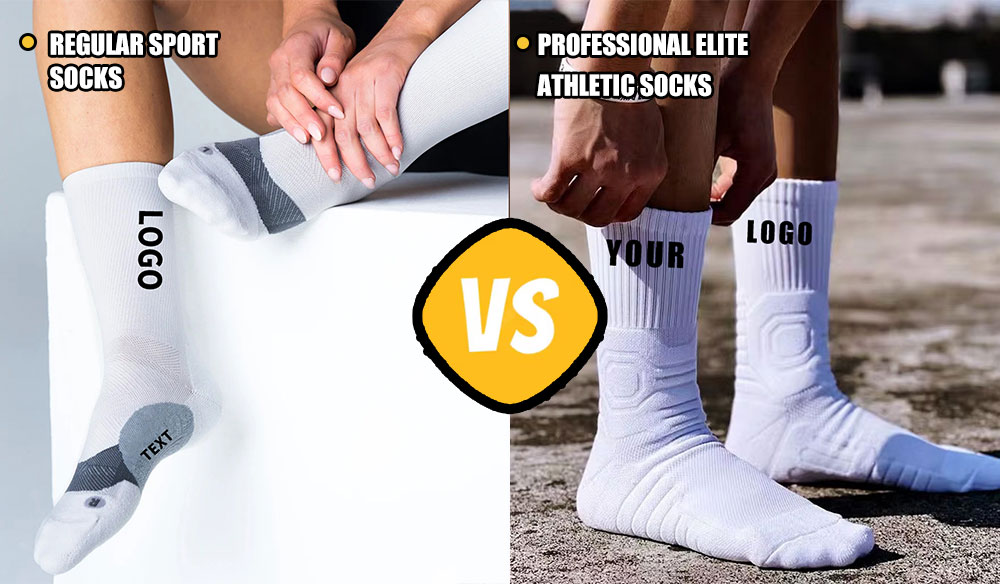
Regular Sport socks vs Professional Elite Athletic Socks
Regular sport socks = “as long as they can be worn”; professional elite Athletic socks = “like wearing an external device for your feet” — lighter, more stable, faster drying, and more durable.
Content Quick View
1. Key features and design differences
| Dimension | Regular sport Socks | Professional Elite Athletic Socks |
|---|---|---|
| Material Selection | Mostly pure cotton or basic blends (high cotton content). Absorbs sweat but becomes damp, heavy, and dries slowly. | Primarily functional fibers (e.g., Coolmax, polyester, nylon), blended with small amounts of elastic fibers (spandex). Offers quick-drying, breathable performance that keeps feet dry and comfortable, while being durable and resistant to pilling. |
| Cushioning & Shock Absorption | Uniform thickness with no targeted cushioning. Provides only basic coverage, unable to reduce impact stress during exercise. | Reinforced terry padding or dedicated “cushion modules” in high-impact zones (heel and forefoot). Structural design disperses impact forces from running or jumping, reducing foot fatigue and injury risk. |
| Fit & Anti-Slip | Loose fit, prone to shifting or wrinkling inside the shoe, which may cause blisters. No special anti-slip features. | Features 3D ergonomic knitting for a snug, foot-hugging fit (e.g., arch compression bands), minimizing sock movement. Some models include silicone dots or anti-slip patterns on the sole to secure the sock-shoe interface and prevent friction and blisters. |
| Breathability & Moisture Wicking | Simple ventilation holes and basic fabric pores for moisture release. Feet tend to feel hot and sweaty during prolonged activity. | Incorporates mesh ventilation zones (e.g., instep, ankle) combined with moisture-wicking fibers to accelerate airflow and keep feet dry, significantly reducing heat and discomfort. |
| Compression & Support | No compression design; provides only basic containment, offering no support for foot stability. | Features graduated compression knitting at the arch and ankle to support the foot arch and reduce strain on ligaments. Ideal for endurance sports like long-distance running or basketball that require sustained foot engagement. |
2.Applicable scenarios and target audience
- Regular Sport socks: Suitable for light, short-term exercise (such as walking, less than 1 hour of aerobics, everyday casual wear), or people who exercise infrequently and do not require high levels of foot protection. These socks offer good value for money and meet basic athletic needs.
- Professional Elite Sports Socks: Suitable for high-intensity, long-duration sports (such as marathons, basketball, soccer, and trail running) or sports enthusiasts and professional athletes. Their targeted design reduces sports injuries (such as blisters and plantar fasciitis) and improves foot stability and comfort during exercise.
Sport socks
- The cushioning layer is relatively thin and can only meet the needs of daily light exercise. It cannot withstand the high-intensity running, jumping, and sudden stops associated with soccer.
- Poor fit, prone to slipping and shifting during exercise, causing direct friction between the foot and the shoe, increasing the risk of blisters and abrasions.
- No targeted support design, lack of protection for the arch and ankle, prone to soreness or injury during prolonged exercise.
Summary: How to choose?
- If the exercise is mainly “leisurely and light,” Regular sports socks can meet your needs without additional investment.
- If the exercise is high-intensity and long-lasting, or if you have experienced foot fatigue or blisters, professional elite sports socks with cushioning, anti-slip, and support functions can significantly improve your exercise experience and reduce the risk of injury, making them a “targeted investment.”